Manufacturing Safety – What it’s Really Worth for SMEs
Efficient operation management and traceability are central to maintaining and improving your company’s profitability. An effective manufacturing safety program is just as important. Here’s what I learned from 36 years in the manufacturing industry.
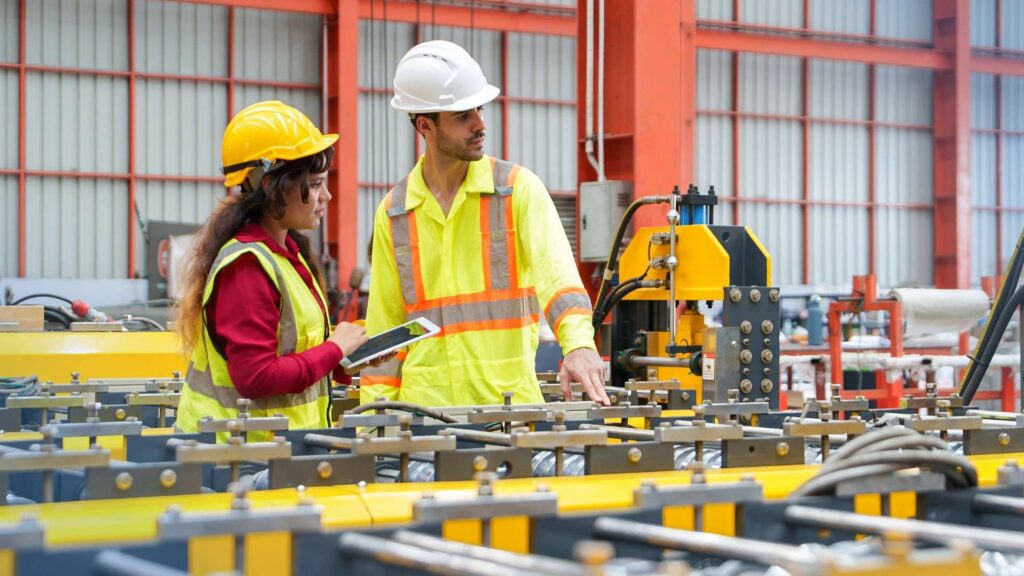
- Treat safety as an operational priority. For a small manufacturer, an accident can stop production, remove key people from the floor, increase insurance costs, and damage customer confidence.
- Start with the hierarchy of controls. Eliminate or substitute hazards where possible, then use engineering and administrative controls before relying on personal protective equipment.
- Assess how work is actually performed. Walk through changeovers, maintenance, cleaning, and other high-risk tasks with the employees who do them, including the shortcuts used when production is under pressure.
- Prioritize machine guarding and hazardous energy control. Guards should prevent access to moving parts, while clear lockout/tagout procedures should isolate and verify every energy source before maintenance begins.
- Select PPE for the worker and the task. Protection only works when it is suitable, comfortable, properly fitted, in good condition, and consistently worn.
- Build trust, training, and worker involvement. Employees are more likely to report hazards and near misses when they know concerns will be taken seriously rather than punished.
- Keep safety procedures current. Update them whenever equipment or processes change, document employee training, and check the regulations and standards that apply in your jurisdiction.
Why is manufacturing safety important to SMEs?
Manufacturing safety brings together the protocols, training, and controls used to protect workers, meet regulatory requirements, and keep production running.
In most markets, workplace safety is regulated. In the United States, OSHA can fine you for violations. The story’s much the same wherever you operate. But the fine is rarely the expensive part. An accident stops the line, pulls your best people off production to handle the aftermath, and takes a machine out of service until somebody qualified signs off on it.
Then come the costs that never appear on the incident report. Insurance premiums that reset based on your claims history. A safety record that your larger customers want to see before they place an order. A reputation in a labor market where every skilled machinist within fifty miles knows somebody who works for you. For a large manufacturer, that’s a bad quarter. But for smaller shops, it may well spell doom.
Start with the hierarchy of controls
The hierarchy of controls ranks five ways to deal with a hazard, from most effective to least effective. If you take one thing away from this guide, take the hierarchy of controls. Everything that follows, from machine guarding to ergonomics, is an application of it.
The top of the list removes the danger. Everything below it is a compromise: you’ve decided to live with the hazard and manage it instead.
- Elimination. Remove the safety hazard entirely. If the mixer can be cleaned in place (CIP), nobody has to climb inside the confined space. If a valve is relocated to floor level, ladders aren’t necessary. Elimination is the only level of protection that shields a worker, no matter what.
- Substitution. Replace the hazard with something less dangerous. Swapping a caustic sanitizer for a milder chemistry cuts chemical hazard exposure. The work doesn’t change, but the danger is diminished.
- Engineering controls. Build the protection into or around the equipment. Machine guarding over moving parts, interlocks that kill power when a door opens, and local exhaust that pulls dust away from the operator’s face. These safeguards work whether or not anybody remembers them, but they can be defeated.
- Administrative controls. Change how the work gets done. Lockout/tagout (LOTO) procedures, safety training, job rotation to limit repetitive strain, or restricting a task to certified operators. Every one of these depends on a person following it correctly, every time, including at the end of a long shift.
- Personal protective equipment. Gloves, hearing protection, respirators, eye protection. The hazard is still there, running at full strength. You’ve put a barrier between it and the worker, and that barrier only works when it fits, when it’s in good condition, and when it’s actually being worn.
Why the cheap fix usually costs more
Most SMEs work from the bottom of the list up. That’s not ignorance: a box of gloves costs less than a guard, and a written SOP costs less than either. When the quote for a proper interlock lands on your desk in a month you’re already behind, the bottom of the list looks like good sense.
But what doesn’t show up on the quote is that an engineering control gets bought once. You install the guard, verify it, and it works every shift, for every operator, whether employees are paying attention or not. Everything below that level you pay for again and again. Training has to be repeated when procedures change and delivered fresh to every new hire, in an industry where turnover is a given. Personal protective equipment (PPE) gets purchased, issued, replaced, and replaced again. And somebody has to keep checking that it’s worn, that it fits, and that it’s still in good condition.
The guard is a one-time cost. The procedure is a permanent one. Over the life of the machine, the expensive option is usually the one that looked cheap at first.
Find the risks in the work as it is actually done
A safety audit answers a question most owners assume they already know the answer to: which level of the hierarchy am I actually relying on for a given hazard? Go beyond whether the plant is compliant. Ask what’s keeping that hazard off your people: a guard, a procedure, or a habit? When the answer is “the operator knows better,” the hazard is still fully live. You’re just betting nobody has a bad day.
The audit won’t find everything. It’s a scheduled walk-through by somebody who doesn’t run the machine. The operator who runs it every day knows about the jams that get cleared without shutting the machine down, because stopping it, locking it out, and bringing it back up takes far longer than the fix itself.
That information already exists in your plant. Whether it reaches you depends on whether telling you is safe.
On your next shift:
Take one job, such as a changeover, sanitation cycle, or blade change, and walk it with the person who does it. At each step, ask what’s preventing an injury: hardware, a procedure, or somebody remembering. Then ask what they’d do if the line went down and the fix looked like ten seconds. And make Gemba walks a part of your weekly routine.
Control common shop-floor hazards
The hierarchy becomes more useful when you apply it to specific work. For most small manufacturers, the main areas to examine are machine guarding, hazardous energy during maintenance, personal protective equipment, and ergonomics.
Machine safety and guarding
Machine safety covers everything that keeps a person and a running machine from occupying the same space at the same time. Guards and barriers do most of that work. Procedures cover what’s left, mainly when the guards have to come off. That last part matters more than it sounds. A machine that’s fully guarded during production is often wide open during a changeover, a jam, or a sanitation cycle. The hazard doesn’t change. The protection does.
Machine guarding answers two different questions, and it’s worth knowing which one you’re solving. The first is about the operator: keeping hands, sleeves, and hair out of the places where the work happens. Machine guards come in several forms, and most plants use more than one:
- Fixed guards stay in place permanently over belts, chains, shafts, and other moving parts nobody needs to reach. They’re the simplest and the most reliable, because there’s nothing to remember and nothing to adjust.
- Interlocked guards cut power to the machine when a door or gate is opened. The machine can’t run with the guard open, which removes the choice from the operator entirely.
- Adjustable guards accommodate different stock sizes on the same machine. They protect well when they’re set correctly, which means somebody has to set them correctly every time.
- Self-adjusting guards move out of the way as the material passes and return on their own. Common on saws and similar equipment, where stock dimensions change constantly.
- Presence-sensing devices, such as light curtains, stop the machine when something crosses a defined plane. Useful where a physical barrier would make the job impossible.
- Two-hand controls occupy both of the operator’s hands during the hazardous part of the cycle, so neither one can be somewhere it shouldn’t.
The second question is about everyone else. The person pushing a pallet jack past your press has no idea what it does or where its danger zone ends. Perimeter fencing, floor marking, and defined pedestrian aisles keep that person out of it. In a smaller shop, this gets overlooked because floor space is tight and the aisle ends up closer to the equipment than anybody would have drawn on purpose. Walk your traffic routes with the same attention you give the machines themselves.
One rule covers both. Some guards have to come off because you can’t change a die or adjust a belt through a fixed cover. The failure is what happens next: the guard goes back on wrong, or doesn’t go back on at all, and the machine runs anyway. If your restart depends on somebody remembering, you’re back at the bottom of the hierarchy.
On your next shift:
Walk your plant along the pedestrian and forklift routes instead of the production line. Stand where traffic passes and look outward at the machines rather than at the aisle. Anywhere you can reach a moving part without stepping off the route, you have a guarding gap that no machine-by-machine inspection will find.
Maintenance safety and lockout/tagout
Lockout/tagout procedures, or LOTO, are the safety protocols that isolate every hazardous energy source on a machine before anyone services it. They also confirm the isolation held before anyone puts a hand inside. They exist because a machine that starts unexpectedly during maintenance will not warn the person inside it.
Machines under maintenance are the most dangerous machines in your plant. The guards are off. Someone is reaching into the places the guards exist to protect. And the person doing it is often working nights, alone or in a small crew, with the least supervision of anyone in the building.
Seven hazardous energy sources
Before you can isolate energy, you have to know what kinds you’re dealing with:
- Electrical. Line power, control voltage, and the charge stored in capacitors and drives after the disconnect is thrown.
- Mechanical. Rotating and moving parts, plus springs under tension or compression.
- Hydraulic. Pressurized fluid, and anything that fluid is holding up.
- Pneumatic. Compressed air and gas.
- Chemical. Sanitizers and CIP caustic in a food plant, and ammonia if you run refrigeration.
- Thermal. Steam, hot surfaces, hot product, and cryogenic at the other end of the scale.
- Gravitational. Suspended loads, raised platens, and anything that comes down when the pressure holding it up bleeds off.
OSHA standards (the Occupational Safety and Health Administration, more on it below) name six of these and then add “or other energy.” Gravity falls into that “other,” which is part of why it’s the one most often missed. It’s also the one you frequently can’t lock out at all. A disconnect has an off position; a raised platen doesn’t. Gravity has to be secured instead. Lower the component to its resting position, or block it mechanically so it can’t travel. If your procedure says “de-energize” and the load is still in the air, the procedure isn’t finished.
One more thing about this list: stored and residual energy isn’t an eighth type. It’s a state that any of these seven can be in after you’ve thrown the disconnect. That’s why releasing it gets its own step rather than its own category.
The LOTO sequence
- Prepare. Review the procedure and know what energy you’re about to control.
- Notify affected personnel.
- Shut down the equipment using its normal controls, in an orderly stop.
- Identify and isolate every energy source.
- Apply locks and tags. Every authorized person applies their own.
- Release or restrain stored and residual energy.
- Verify that the isolation worked and the machine cannot start.
Steps one and three through seven are the sequence OSHA lays out in 1910.147(d). Notification sits elsewhere in the standard rather than inside that sequence, but it’s required, and leaving it out is how a production crew discovers a line is down by trying to start it.
What makes a procedure get followed
I wrote more than 350 LOTO procedures and other safety protocols over my career. A LOTO procedure is only as good as its worst reader. Mine had to be clear, specific, and simple enough to follow under pressure. I tested them by handing a procedure to someone who didn’t know the machine and watching how they did. If they hesitated, the procedure was wrong, not the person.
- Photos of every lockout point are worth more than any paragraph describing where the valve is.
- Listing the specific locks, tags, hasps, and blocking devices the job requires means nobody walks back to the shop mid-procedure to find a tool.
- Keep procedures where they can actually be updated. I kept mine in a database with the review and revision date on every one, and printed each department the procedures that applied to their equipment.
- Update any procedure the moment the machine is modified.
- And once a year, watch someone use the procedure. OSHA requires a periodic inspection at least annually. An authorized employee, other than the one performing the work, observes the procedure being carried out and certifies it. That’s a different thing from reading the document over.
On your next shift:
Pull three LOTO procedures at random. Read them the way someone would at two in the morning. Are they clear enough to follow without knowing the machine? Then take them to the equipment and check that every isolation point is where the procedure says it is, paying particular attention to anything held up by hydraulic or pneumatic pressure. If nothing brings it down or blocks it, the machine is still loaded after your people think it’s dead.
Personal protective equipment
Personal protective equipment includes gloves, glasses, hearing protection, respirators, boots, and anything else worn to put a barrier between a worker and a hazard. It sits at the bottom of the hierarchy of controls because it doesn’t reduce the hazard at all. It’s also the control with the shortest memory. A guard installed five years ago is still working this morning. Gloves work only if somebody puts them on today.
Most plants need several types:
- Eye and face protection. Safety glasses for impact, goggles for splash and dust, face shields for grinding and chemical handling. A face shield goes over glasses or goggles, not instead of them.
- Hearing protection. Earplugs and earmuffs, rated by how much noise they attenuate. Both work only when they seal properly.
- Hand protection. Cut-resistant for blades and sharp stock, chemical-resistant for sanitizers and solvents, insulated for electrical work, thermal for hot surfaces. One glove almost never covers two of those.
- Respiratory protection. Dust masks, half-face and full-face respirators, and supplied-air systems. Anything that seals to the face requires a fit test, and facial hair will break that seal.
- Head protection. Hard hats where objects can fall or where fixed equipment presents a strike hazard.
- Foot protection. Safety-toe boots for impact and compression. Slip-resistant soles for wet floors. Metatarsal guards where heavy stock gets handled.
- Fall protection. Harnesses, lanyards, and anchor points for work at height, including on top of equipment.
- Protective clothing. Aprons and sleeves for chemical and cut hazards, high-visibility clothing around powered vehicles, and arc-rated clothing for electrical work.
Fit matters as much as selection
The right PPE in the wrong size ends up in a locker. Gloves and boots are the worst offenders. Plenty of plants stock one size range that fits one body type, and everyone else makes do. Oversized gloves mean less grip and less feel for the work, which is more risk, not less.
Comfort works the same way. Glasses that fog, muffs that ache after an hour, gloves too thick to handle small parts. Each one is a reason to take the equipment off, and people do.
On your next shift:
Ask the people wearing PPE what’s wrong with it. Don’t ask only whether they’re wearing it. Ask what’s uncomfortable, what doesn’t fit, and what they take off first when the shift gets long. Every answer you get is a compliance problem you can solve by purchasing instead of disciplining.
Ergonomics and repetitive work
Ergonomics is the practice of fitting the job to the worker rather than the worker to the job. It’s a large enough subject to fill an article of its own, and most companies eventually bring in an ergonomics professional to assess the work properly. But the basic idea is worth understanding now.
One of the biggest issues is musculoskeletal disorders caused by repetitive motion. It’s high on the list of workers’ compensation claims and reportable injuries.
Repetitive motion means a task is done the same way, over and over again. Reaching overhead, extending the arm continuously, and cutting product in a food processing plant are just a few examples. At first glance, these activities appear rather benign. They’re not. Once you spot the root problem, though, it’s often easy to fix.
I was called in at 2:00 AM for an emergency response to an electrical hazard. As I stepped off my truck, a sharp, excruciating pain shot through my foot. It careened up my leg, exploding like fireworks in my brain.
The pain dwindled and I went inside to get the job done, and headed for home. Back at my truck, I opened the door and saw my long, heavy flashlight hanging out of its sleeve. So I tapped it back in place with my foot, something I’d done a thousand times before. The pain shot through my foot like I’d been shocked.
That was the culprit! My body finally said enough was enough and rebelled. The fix? I moved the flashlight so I’d never have to bump it back in place. My foot healed and the pain never returned. Sometimes it’s just that easy.
Poor lifting technique, along with the slip, trip, and fall hazards that come with wet floors and crowded aisles, belongs in the same safety management conversation. Each one is a hazard you can engineer out before you train around it.
Job rotation is one of the simpler controls available. Moving people to a different type of job periodically lets them use a different set of muscles and movements. The benefit is twofold. It reduces repetitive motion injuries, and cross-training helps when a job goes unfilled due to vacations, sick leave, or other absences.
On your next shift:
Pick one repetitive task and watch it for ten minutes. Count how many times the worker reaches overhead, twists, or grips hard. Then ask two questions: what would have to change to eliminate the worst motion, and could this person rotate to a job that uses different muscles?
Build a safety culture
Buy-in has to run from the boardroom door to the production floor. That means spending money on the right equipment and backing up the people responsible for safety when they make a call nobody wants to hear.
Involve your workers
Include line workers in the risk assessment and in creating a safe workplace. After all, they’re the ones doing the work and have a vested interest in their health. They know the tasks better than anyone. They live with them. Take advantage of their knowledge.
Promote employee trust
Ensure not just a safe working environment, but an atmosphere of trust and understanding. If employees are afraid to report accidents and near misses, they’ll stop reporting. The hazards don’t stop.
Train your people
Safety training is what turns a written procedure into something that actually happens on the floor. It comes in three kinds:
- New hire orientation. Before anyone touches equipment, cover the hazards in your plant, what the PPE is for, and what to do when something goes wrong.
- Task-specific training. Covers the machine or job the person is assigned to. It repeats when they move to a different one.
- Refresher training. Brings everyone back when a procedure changes, when equipment is modified, or when an incident shows the first round didn’t take.
Document all of it. Training records are the only reliable way to know who’s been trained on what.
Know which safety rules apply
Two different kinds of organizations show up in a safety conversation, and it helps to know which one you’re dealing with. Regulators enforce workplace safety laws. Standards bodies publish technical guidance and consensus standards that help businesses select appropriate controls.
The following overview is a starting point. Requirements vary by jurisdiction, industry, and type of work, so check the rules that apply to your operation.
United States
- OSHA, the Occupational Safety and Health Administration, sets and enforces federal workplace safety standards. It can inspect, cite, and levy penalties.
- Twenty-two states and territories run their own OSHA-approved plans covering private employers. Seven more cover public employees only. State plans must be at least as effective as the federal program, and several are stricter.
- NIOSH (National Institute for Occupational Safety and Health) researches workplace hazards and recommends exposure limits. It doesn’t enforce anything.
- ANSI (American National Standards Institute) accredits consensus standards covering equipment design, eye protection, and hazard communication.
- NFPA (National Fire Protection Association) writes fire codes, but that’s only part of what it does. NFPA 70E, the Standard for Electrical Safety in the Workplace, covers arc flash, shock protection boundaries, arc-rated PPE, and energized work permits. NFPA 660 consolidates the requirements for combustible dust and particulate solids that were previously spread across several standards, including NFPA 652 and 654.
Canada
- Occupational health and safety is mostly provincial and territorial. Federal law covers only specific sectors such as banking and interprovincial transport. Your rules come from your province.
- CCOHS (Canadian Centre for Occupational Health and Safety) is a national information and prevention resource, not an enforcement agency.
- WHMIS (Workplace Hazardous Materials Information System) governs hazard communication for chemicals and applies across the country.
European Union and United Kingdom
- Framework Directive 89/391/EEC sets the baseline for protecting workers’ safety and health and is implemented through each member state’s national law.
- Machinery Regulation (EU) 2023/1230 applies from 20 January 2027, replacing Machinery Directive 2006/42/EC.
- EU-OSHA provides information and prevention resources. It doesn’t enforce.
- In the United Kingdom, the HSE (Health and Safety Executive) enforces workplace safety law. And the Provision and Use of Work Equipment Regulations 1998 (PUWER) places duties on businesses that own, operate, control, or provide work equipment.
International
- ISO 45001 is an international occupational health and safety management system standard. Certification is voluntary, but customers may ask suppliers for it.
Also, read our list of top ISO standards for manufacturing businesses.
What safety is really worth
Sure, it costs money to buy safety equipment. It takes time to develop a safety program. But it’s time and money well spent. I’ve mourned at the graveside with the family of a team member who died in an industrial accident. I’ve sat in the hospital room of a coworker who suffered an incapacitating injury that ended his work career.
Start with one high-risk task, walk it with the person who performs it, and move the control as high up the hierarchy as you can. Proper manufacturing safety doesn’t cost; it pays.
Frequently asked questions (FAQ)
Manufacturing safety regulations vary by country, industry, equipment, and type of work. They commonly cover machine guarding, hazardous energy control, chemical handling, PPE, employee training, incident records, and the safe use and maintenance of equipment. Manufacturers should confirm the requirements with their national or local regulator.
Practical ideas include improving machine guarding, using lockout/tagout procedures, separating pedestrian and forklift routes, fitting PPE properly, rotating repetitive jobs, and asking operators about hazards and near misses. Start with one high-risk task and replace controls that depend on memory with engineered safeguards wherever possible.
Major frameworks include ISO 12100 for machinery risk assessment, OSHA 29 CFR 1910 in the United States, the EU Machinery Regulation 2023/1230, and PUWER in the United Kingdom. Standards such as ANSI B11 and NFPA 70E may also apply depending on the machinery and hazards involved.
Manufacturing software can support safety by keeping BOMs, routings, work orders, quality records, and lot or serial number traceability organized. It does not replace guarding, training, or dedicated safety systems, but clearer process information can help reduce errors, investigate incidents, and maintain consistent procedures.
You may also like: Quality Control in Manufacturing – An SMEs Guide
Get manufacturing know-how delivered to your inbox!