Batch Tracking – A Simple Guide
Batch tracking is a functionality that no batch production setup should go without. In this guide, we look at the fundamentals of batch tracking and see how MRP software can help achieve traceability.

You can also listen to this article:
Key takeaways
- Batch tracking records the origin, production history, inventory movements, and destination of a defined group of materials or products. It connects supplier batches, material lots, production runs, finished goods, shipments, and customers.
- Batch numbers and lot numbers are related but not always identical. A production batch usually refers to goods manufactured together, while a stock lot is a quantity managed as a distinct inventory unit.
- Batch numbers, SKUs, and serial numbers serve different purposes. SKUs identify product types, batch numbers identify groups produced together, and serial numbers identify individual units.
- Batch traceability supports compliance, quality control, expiry management, inventory sequencing, and targeted recalls. It helps manufacturers isolate affected products quickly instead of inspecting or recalling all inventory.
- Batch tracking software reduces the limitations of manual spreadsheets. Inventory and MRP systems can connect purchasing, production, inventory, quality, and sales records while providing real-time visibility into stock movements.
- MRPeasy maintains batch traceability through stock lots, bookings, production records, and inventory transactions. It supports FIFO and FEFO allocation, expiry tracking, barcode labels, quality inspection, multiple storage locations, certificates, returns, and lot-level production cost records.
What is batch tracking?
Batch tracking is the process of recording the origin, production history, inventory movements, and destination of a defined group of materials or products. It creates a traceable connection between supplier batches, material lots, production runs, finished-goods batches, shipments, and customers.
Batch tracking is common in food, beverage, cosmetics, chemicals, pharmaceuticals, electronics, automotive components, and other industries where quality issues must be isolated efficiently. While mostly associated with process manufacturing, it can also be used in discrete manufacturing, assembly, kitting, packaging, and distribution. It is not limited to companies using a traditional batch-production model.
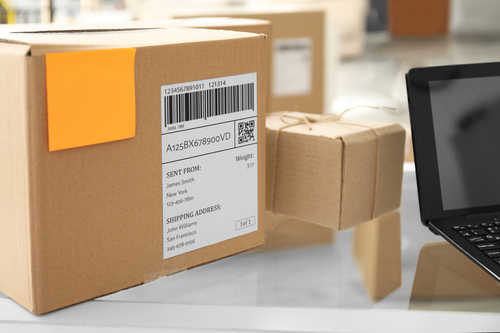
Batch traceability is achieved by assigning batch numbers to manufactured goods and using either traceability software or manual methods to track the data associated with them. For example, systems with batch-tracking functionality automatically generate and assign batch numbers. These can then be printed out as labels or barcodes and taped to finished products or racks, or assigned to physical items using machine vision systems.
Batch numbers can be customized to include a wealth of information about the batch, such as its manufacturing and expiration dates, workstations and employees involved, routing information, raw material sources, etc. This traceability is exceedingly important for assuring regulatory compliance, handling recalls and RMAs, simplifying quality control, optimizing inventories, and raising the overall level of control over the manufacturing system and supply chain.
Batch numbers vs lot numbers
The terms “batch” and “lot” do not have a universal distinction. Their meaning depends on the industry, applicable regulations, and the inventory system being used.
A production batch usually refers to a quantity manufactured together under common operating conditions. For example, 1,000 liters mixed in the same vessel during a single production run may constitute a single batch.
A stock lot usually refers to a quantity managed as a distinct inventory unit. If the 1,000-liter batch is divided between two warehouses or packaged and received into stock at different times, it may be represented by several stock lots while retaining the same production batch number.
Software systems may use lot tracking as the technical mechanism for maintaining batch traceability. For this reason, businesses should document:
- What event creates a new production batch;
- What event creates a new internal stock lot;
- How supplier batch numbers are recorded;
- How batches are divided or combined;
- Which identifier must appear on labels and customer documents;
- How the original identifier is preserved across warehouses or production sites.
The important requirement is not the terminology itself but whether the records support complete backward and forward traceability.
What is the difference between batch numbers, SKU codes, and serial numbers?
Let’s also clear up the difference between batch numbers and other common inventory identifiers – SKU codes and serial numbers.
An SKU code is a unique identification number that is assigned to every component or product of the same kind in an inventory system. For example, if a cupcake manufacturer produces many flavors of cupcakes, each flavor of cupcake will have a different SKU code, and every cupcake of that flavor shares the same SKU code.
While a single batch of products all have the same SKU code and batch number, the next batch of the same product has the same SKU code but a new batch number. If a particular batch of goods is stored in two different locations, however, both of these may also have different lot numbers, while sharing the same batch number.
Serial numbers, on the other hand, differ from both SKU codes and batch numbers in that they are assigned to every individual product or component separately. Serial number tracking is usually not used in batch production workflows, especially in process manufacturing. However, if per-item traceability is required, tracking both serial and batch numbers in concert is possible.
The importance of batch traceability
Any modern manufacturing or distribution operation has a lot to gain from end-to-end traceability, whether it’s achieved through batch, lot, serial number tracking, or a combination of these. Next, let’s look at the prime benefits that batch traceability can bring.
Regulatory compliance
Many industries and markets require businesses to maintain records of their manufacturing processes and distribution. Prominent examples include pharmaceuticals, food and beverage, automotive, and electronics. Having a robust batch tracking system simplifies meeting these requirements, smoothing the audit process, reducing the risk of non-compliance penalties, and above all, helping to ensure that the products conform to quality and safety standards. Batch traceability also helps to demonstrate the transparency of operations and instill confidence in regulatory bodies.
Expiration date tracking
Next to compliance, one of the key benefits of utilizing batch numbers lies in the ability to track the expiry date of perishable goods. Expiry date tracking prevents the accidental sale or use of expired products and hugely simplifies managing product rotations. This is particularly crucial for food safety and in pharmaceuticals production where the consumption of products past their shelf life could lead to health hazards. Expiration tracking can also be useful financially, however, for preventing losses associated with spoilage or even managing timed promotions.
Accurate inventory sequencing
In terms of inventory management and sequencing, batch tracking helps facilitate inventory valuation methods like FIFO (First-In, First-Out), LIFO (Last-In, First-Out), and FEFO (First-Expired, First-Out). These are crucial for reducing obsolescence and waste as stock can be sorted and sequenced by their production or expiry dates – information easily accessible via the stock’s batch information. FIFO ensures that the oldest stock is used or sold first; LIFO achieves the opposite; and FEFO prioritizes using items closer to their expiration date. The above methods also influence a company’s bottom line and tax requirements in different ways, providing greater control over its financials.
Quality control and Q/A
Batch traceability is a cornerstone of effective quality control and quality assurance. It allows manufacturers to monitor the quality of their raw materials and products throughout the production process. By tracking batches, any quality issue can be quickly isolated to a specific batch, limiting the required scope of quality inspections and making problem-solving faster and more cost-effective. This simplifies maintaining high standards of product quality and also helps to enhance brand reputation.
Easier callbacks and RMAs
In the event of a product recall or RMA (return merchandise authorization), batch traceability significantly simplifies the returns and troubleshooting process. If an issue arises with an item, a business can use the batch number to investigate the source of the problem and pull the entire batch off the market if necessary. This way, a single refund or exchange case can serve as grounds for designating an entire batch for quality control. This targeted approach represents an added layer of control and minimizes the financial and reputational impact of quality issues. What’s more, batch tracking helps customer support provide more efficient service by providing more information about the product and how to take appropriate action.

How batch genealogy works
Batch genealogy is the network of relationships connecting raw materials with production runs and finished products.
For example, a manufacturer receives two ingredient lots:
| Record | Item | Quantity |
|---|---|---|
| Supplier lot SUP-7718 | Ingredient A | 500 kg |
| Supplier lot SUP-8842 | Ingredient B | 200 kg |
Parts of these lots are consumed in manufacturing order MO-1048, which produces finished batch FG-00311. The finished batch is divided between two warehouse locations and shipped to three customers.
Backward traceability starts with the finished batch FG-00311 and identifies:
- Manufacturing order MO-1048
- Production date and operations
- Employees or workstations involved
- Quantities consumed from SUP-7718 and SUP-8842
- Suppliers and purchase orders
- Related inspection records
Forward traceability starts with a suspect material lot, such as SUP-7718, and identifies:
- Every manufacturing order that consumed it
- Every finished batch produced from it
- Quantities remaining in inventory
- Quantities already shipped
- Customers and shipment dates
A complete batch-tracking system must also preserve relationships when batches are split, transferred, repackaged, combined, returned, or partially rejected.
Batch tracking with traceability software
Maintaining batch traceability manually can be a daunting task, especially for businesses with complex distribution chains and large inventories. Manual tracking involves managing extensive records in spreadsheets that are known to be prone to errors and oversights. Manual methods also lack the speed and real-time data access necessary for efficient decision-making, particularly when a company starts growing in production volume.
In contrast, using inventory management software or an MRP system with built-in batch tracking features has significant, and cost-effective benefits. This type of software automates large parts of the tracking process. It ensures accurate and efficient data management while simplifying regulatory compliance and quality control. Besides that, it also offers real-time visibility into inventory levels and movements.
Batch tracking with MRPeasy
MRPeasy uses stock lots, bookings, production records, and inventory transactions to maintain batch traceability.
A stock lot is created when purchased goods are received and when a production run creates finished goods. Because each delivery or production receipt can create its own stock lot, the internal stock lot number does not necessarily match the supplier’s or manufacturer’s batch number. External batch numbers can be recorded in the stock lot number or in a custom field.
During production planning, MRPeasy can propose which material lots to use based on FIFO or FEFO. Bookings reserve quantities from specific lots for the manufacturing order, preventing the same stock from being allocated twice. Workers can see the booked lot numbers, quantities, and locations when reporting production.
When workers report actual consumption, the material lots become connected to the manufacturing order. Completing production creates a finished-goods lot that can subsequently be booked and shipped to customers. These records provide the links required for backward and forward tracing.
MRPeasy can also support:
- Expiry-date tracking and FEFO allocation.
- Multiple storage locations and warehouses.
- Lot and location labels with barcodes.
- Individual serial numbers within stock lots.
- Files and certificates attached to lots.
- Inspection and quarantine of incoming or manufactured goods.
- Partial acceptance or rejection during quality inspection.
- Stock-movement reports.
- Customer returns and repair or service orders.
- Actual material, labor, and manufacturing overhead costs for each production lot.
Most automatically created stock lots do not need to be managed manually during everyday operations. Accurate bookings and transaction reporting maintain the relationships in the background. However, employees must still identify physical lots correctly and report deviations whenever the lot actually consumed differs from the lot originally booked.
Frequently asked questions
Batch tracking follows products manufactured together under common production conditions, while lot tracking follows quantities managed as distinct inventory groups. In practice, the terms are often used interchangeably, and many inventory systems use stock lots to maintain batch traceability. One production batch may be divided into several stock lots when it is packaged, stored, or delivered separately.
Spreadsheets can support basic batch tracking when transaction volumes and supply chains are simple. However, they become difficult to maintain when batches are split, combined, transferred, consumed in multiple production runs, or shipped to several customers. MRP or inventory software reduces manual work by connecting purchasing, production, inventory, quality, and sales records.
Batch tracking is especially important in food and beverage, pharmaceuticals, cosmetics, chemicals, medical devices, automotive, electronics, and other regulated or quality-sensitive industries. It is also useful for any manufacturer that needs to manage expiry dates, investigate defects, document material origins, or conduct targeted recalls.
You might also like Manufacturing Supply Chain Management – Best Practices for SMEs
Get manufacturing know-how delivered to your inbox!