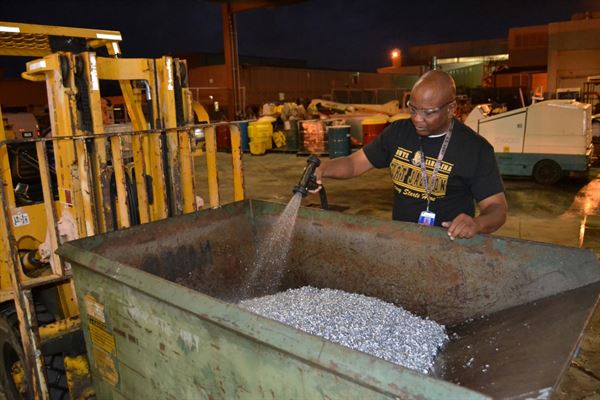
What Is Toll Manufacturing? A Practical Guide for SMEs
Sometimes, small manufacturers have an idea for a new product. They have the cash for raw materials and product design. They may not have the resources or specialized equipment for prototyping or advanced manufacturing. Toll manufacturing could be the answer to several challenges.

Key takeaways
- Toll manufacturing is an arrangement where the client supplies and owns the main raw materials and the toller provides the equipment, labor, and know-how to complete the job for a fee.
- Tolling works especially well for occasional jobs when the client can’t justify owning the equipment outright. This includes prototyping and seasonal demand peaks, although ongoing production can also be outsourced.
- Every batch must be reconciled. Good product returned, plus documented processing loss, scrap, and returned material must account for what was sent to the toller.
- Count the real cost. The toll fee is only part of it. The cost per good unit includes relevant freight, testing, and yield loss.
- Put everything in writing and track it. Sign a toll manufacturing agreement before the first shipment to the toller. Material at the toller’s facility is kept visible more easily with manufacturing ERP software.
What is toll manufacturing?
Toll manufacturing is an arrangement where one company (client) supplies raw materials or semi-finished goods to a third-party manufacturer, called a toll manufacturer or toller. The toller processes them for a fee. This arrangement is also referred to as toll processing. Third-party manufacturers often sell these arrangements as toll processing services.
The toller generally doesn’t supply the main raw materials directly related to the product’s manufacture, although they may provide consumables or minor inputs. They supply the equipment, process know-how, and direct labor. They also supply the facilities where the product is made or assembled. The client may well be a manufacturer themselves with existing machinery. But the toller often has specialized equipment that the client can’t justify owning. Examples are heat-treating furnaces and electroplating lines.
Clients contract with tollers for one of two kinds of jobs. They want the toller to either manufacture or process the whole product (full tolling), or they need just one step in their own production outsourced (partial tolling).
Toll manufacturing vs. contract manufacturing
The main difference between them is in who buys and owns the raw materials. Other differences are shown in this table.
| Item or service | Toll manufacturing | Contract manufacturing |
|---|---|---|
| Main raw materials purchased by | Client | Contract manufacturer |
| Main raw materials owned by during processing | Client | Usually the contract manufacturer, depending on the agreement |
| Manufacturing or processing services | Toller | Contract manufacturer |
| Pricing structure | Fee for processing services | Price generally includes materials and manufacturing |
| Raw material sourcing and quality | Primarily controlled by the client | Primarily controlled by the contract manufacturer |
| Inventory tracking | Client tracks materials supplied to the toller | Contract manufacturer generally tracks materials it sources |
These are typical arrangements rather than fixed rules. Quality control, logistics, packaging, and risk allocation depend on the agreement in either model.
Choosing between full and partial tolling comes down to the job. Full tolling suits jobs where the toller makes the whole product using the client’s materials. Outsourcing one step suits a single operation, such as heat treating or powder coating, while the client performs the remaining production steps. Both arrangements need clear shipment records, material reconciliation, and lot traceability.
There are legal considerations, such as risk and intellectual property protection. But toll manufacturing works quite differently from turnkey operations such as contract manufacturing or co-manufacturing.
How does toll manufacturing work in practice?
In the toll manufacturing process, the client’s material leaves its facility and returns changed. Without proper procedures and process tracking, problems occur in that gap between what was shipped and what came back. These eight steps help prevent most issues.
- Agree on all terms before any actions are taken. This will include the fee and required lead time. Product specifications and quality standards need to be laid out. Yield allowance should be documented as well. The agreement should also cover material ownership, liability, and how losses or rejected batches are handled.
- The client’s procurement team buys and stages the raw materials. This keeps inbound supply chain management under the client’s control. Control includes supplier, material grade, and price. If any materials bypass the client’s warehouse and go straight to the toller, they still must be recorded since they remain in the client’s inventory records.
- The client’s warehouse team generates a picking list and shipping documents. Lot numbers and quantities are recorded by the client. They will be used as a baseline for reconciliation. If a small overage is shipped to cover expected processing loss, it should be recorded as well.
- When the toller receives the production materials, they inspect and segregate them. This includes material handling tasks like matching counts against shipping documents and inspecting for any damage incurred during shipping. After that, the toller will put the materials in a designated warehouse location, separate from other customers’ inventory.
- The toller will then process the materials on their production lines according to the client’s specifications.
- Quality control testing is next, performed according to the agreed-on specifications. Certificates of analysis or batch records, where applicable, travel back to the client with the return shipment.
- Next come the return and reconciliation procedures, which many SMEs fail to perform properly. The toller reports scrap and rework, and returns unused material, along with the finished product. When the finished product is received back, the client needs to perform a materials balance check. The balance check, expressed as a simplified equation, is: What went out = good product returned + processing loss + scrap + returned unused material.
- The last step closes the project. The invoice from the toller should include the toll fee, along with any pass-through costs. The relevant direct costs should be added to the final product cost on the client’s side.
The quantities must be expressed in compatible units, and loss and scrap must be recorded separately to avoid double-counting. For processes such as drying or chemical blending, expected changes in weight or composition must also be accounted for. Any discrepancies should be investigated immediately. Issues can become major disputes if not handled right away.
Examples of toll manufacturing
Many industries take advantage of toll manufacturing. Some tollers will produce the complete product while others add the finishing touches.
Chemical and coating processing
Clients may contract with a toll manufacturer for blending, milling, and drying of chemical mixtures and coatings. This process is used for both liquids and solids or powders. Products that don’t meet specifications may need to be reworked or scrapped, contributing to low yield. It must be decided who keeps or disposes of off-spec batches. Unused ingredients will usually be shipped back to the client.
Food and nutraceuticals
Some of the processes performed by the toller are roasting, grinding, spray drying, and encapsulation of the client’s own ingredients. Here, ensuring lot traceability is crucial, from incoming ingredients to finished lots or batches. When customer complaints, consumer health problems, or compliance issues arise, the client must know exactly where the problem originated.
Since the ingredients used are shipped to the toller and not ordered or obtained by them, the client is able to protect its proprietary formulations more easily than with contract manufacturing. The toller will run multiple customers’ products using the same equipment, so there is also a cross-contamination risk that needs to be addressed.
Metal finishing
Perhaps the most common outsourcing for smaller metal fab shops is heat treating, along with plating, powder coatings, and galvanizing. The manufactured parts are sent to the toller, who may bill by weight. The client counts by the piece, so the counts need to be reconciled to the weight. Rejects will be sent back for rework by the client or reworked by the toller before shipping.
When should SMEs opt for toll manufacturing?
Whether to use a toller is a manufacturing strategy decision that’s made per process or product rather than once for the whole business. Sometimes it makes good sense. Other times, it can be a hindrance.
When it’s a good fit
A toller makes sense if a process needs specialized equipment that the business would only run occasionally. When testing a new product, using a toller for pilot runs and prototyping can lower risk without making a major capital investment.
Sometimes seasonal demand peaks put manufacturing beyond in-house capacity. A toller can take up the slack.
Tolling can also make more sense than using a turnkey operation if the company needs to control the sourcing and quality of proprietary ingredients. Similarly, the client may have access to better material prices than a contract manufacturer has, or may have existing supplier contracts.
When it’s not a good fit
Very small custom jobs. Some tollers have a batch size minimum. If the run falls below it, they may not accept the job. A prototyping or custom manufacturing service might be a better fit.
If the product is a core line of the business and the volume is sufficient to justify the expense of owned equipment, toll manufacturing may be less attractive. With commodity inputs, sometimes a turnkey manufacturing strategy makes better financial sense.
Using a toller introduces logistical and management challenges. Shipping raw materials to the toller and then the finished product back to the client can create two extra transport legs compared with in-house production. This lengthens lead times and adds to the probability of something going wrong. Additionally, the client may not have the capacity or resources to manage procurement, two-way logistics, or offsite stock.
Toll manufacturing benefits and challenges
Using a toll manufacturer can benefit the client company, both strategically and financially. But it does come with challenges, mostly in supply chain planning and inventory control. Even so, they can be overcome with a few practical fixes.
Benefits, with useful tips
- For a process that’s run occasionally, toll manufacturing saves the client from needing to make a major capital investment in a manufacturing facility or equipment that sits idle.
- Tip: Compare the annual toll spend against what it would cost to install and own the equipment yourself.
- Unlike typical contract manufacturing arrangements, the client retains control of the main material inputs and their sourcing.
- Tip: Specify who buys and owns each material, including any consumables the toller supplies.
- Toll manufacturing clients gain more flexible capacity and can absorb peaks more easily by outsourcing production. Hiring seasonal workers may become unnecessary.
- Tip: Book capacity well ahead of seasonal peaks.
- A small shop can gain access to advanced manufacturing processes that it couldn’t afford. Specialized finishing equipment, automated production lines, and advanced testing capabilities are perks of using a well-equipped toller.
- Tip: Identify any specialized technologies that would improve your product’s manufacturing.
Challenges, with practical fixes
- When the client’s stock sits offsite at the toller’s facility, it’s inventory that can’t be easily seen. It’s possible to lose track of it.
- Fix: Track the materials as company-owned inventory or work in process, not as a completed purchase. This keeps your inventory and production cost records accurate.
- Yield disputes come up when less good product comes back than expected.
- Fix: Agree on how to handle yield allowance and material balance reporting upfront. Get it in writing.
- Proprietary formulas and processes are always at risk.
- Fix: Make sure the toll manufacturing agreement includes confidentiality and intellectual property protection clauses.
- Capacity competition is a challenge when the toller has other customers. Their jobs compete with yours.
- Fix: Share your demand forecasts and ask for the toller’s capacity forecasts. Book production slots well in advance.
- When using a toller, the supply chain is often longer because of the additional transportation involved.
- Fix: Build the additional time into your lead times.
How to choose a toll manufacturer
Choosing the right toll manufacturer is just as important as deciding to use one. Here’s a checklist for vetting them:
- Capability: Do they have the right equipment and capacity to handle your batch sizes or specific product manufacturing processes?
- Quality: Do they have documented certifications and quality control processes?
- Material control: Do they have measures in place to ensure your material is segregated, counted, and reported accurately?
- Capacity and lead times: Are they able to make realistic commitments?
- Communication: Are they easy to contact if a batch goes wrong?
- Trial runs: Can they perform trial runs before you commit to a full-volume run?
- Pricing: Do they price per unit, weight, batch, or machine hour, and is setup included?
- Agreement terms: When you sign a toll manufacturing agreement, does it cover everything you need, including material ownership, losses, insurance, and the return of finished goods?
The real cost of toll manufacturing
The toll fee is just the price listed on the toller’s quote for the project. The real cost includes everything else the job adds, and all of it belongs in the product cost.
Costs that add to the project
- Material (already paid for, and carried longer while it’s offsite).
- The toll fee itself, plus setup or minimum-batch charges.
- Freight both ways.
- Yield loss and overshipment.
- Scrap and rework.
- Quality testing, incoming and outgoing.
- Inventory carrying cost: cash tied up in material at the toller and in transit.
- Admin and coordination time.
A worked example of the true costs involved
In this example, we’ll work with enough material for 1,000 units of product, purchased by the client for a total price of $10,000. The toll fee is $2,500. So a simple estimate puts the cost at $12.50 per unit. But that fails to add in shipping costs both ways, quality testing, and yield loss. Here’s what it looks like in table form:
| Cost item | Amount |
|---|---|
| Material (1,000 units’ worth) | $10,000 |
| Toll fee ($2.50 × 1,000 units) | $2,500 |
| Freight, both ways | $400 |
| Quality testing | $300 |
| Total cost | $13,200 |
| Good units returned (4% yield loss) | 960 |
| Real cost per good unit ($13,200 ÷ 960) | $13.75 |
| Simple estimate ($10.00 material + $2.50 fee) | $12.50 |
This means there’s a gap of $1.25 per unit, bringing the real cost per unit to $13.75. The gap comes from freight and testing ($700 spread over 1,000 planned units = $0.70), and from yield loss (spreading the full $13,200 cost over 960 good units instead of 1,000 = $0.55).
The material remains the client’s property while stored at the toller, although its accounting value may move into work in process during processing. The direct production costs in the example contribute to the cost per good unit. Other expenses, such as inventory carrying costs and general administration, should be included when evaluating the overall economics of tolling, even if accounting rules require them to be expensed separately. Leaving relevant costs out of the calculation will overstate the expected margin.
To compare this with in-house manufacturing, set the full cost per good unit against the cost of owning and operating the equipment, including the capital investment, not just the toll fee.

How does manufacturing ERP software simplify toll manufacturing?
When a business uses a toller, its inventory is split between two places: stock that sits in its own warehouse, and stock in the toller’s facility, sent for processing. Spreadsheets often track only what’s on the client’s shelves. It’s easy to lose sight of what’s housed at the toller. A spreadsheet can basically handle the math in the worked example above, but only if someone enters every shipment, receipt, and yield loss by hand. And each manual entry leaves room for error.
Conversely, manufacturing ERP software can automate and integrate many parts of the toll manufacturing workflow. In full tolling, the client’s warehouse stock count drops as soon as material ships to the toller. But the material still belongs to the client, and its value must remain accounted for. Without the right setup, it can be difficult to see how much material is sitting at the toller’s facility or tied up in unfinished work. For example, manufacturing ERP software can help with the following:
- Material sent to the toller is tied to the toll or subcontracting order.
- Shipping documents can be created for outgoing materials.
- Returns, scrap, and inspections can be recorded in the system, using the appropriate inventory and quality control functions.
- Toll fees and material costs can be included in the product cost, with additional charges recorded where necessary.
- Outsourced lead time shows up in the production schedule.
- Stock at the toller can stay visible in the inventory system when offsite stock tracking is configured.
- Lot traceability can be maintained through the toller’s step when material usage and returned lots are recorded correctly.
Manufacturing software goes a long way toward simplifying tracking and managing toll manufacturing workflows. In MRPeasy, the Subcontracting functionality supports two main approaches, depending on whether the toller completes the whole product or performs only certain operations.
How manufacturing ERP handles full tolling
In full tolling, the client sets up the toller as a vendor. In MRPeasy, the completed product is set up as a procured item, even though the client supplies its materials. From there, the process runs in four steps:
- The client creates a subcontracting BOM (bill of materials) that lists the materials it sends the toller. The BOM is linked to the toller’s purchase terms. That allows the system to know which toller does the work, at what price, and with what lead time.
- The client creates a PO (purchase order) for the job and reserves the materials to complete it.
- The materials are shipped to the toller using a shipment document, with a picking list and waybill available. If some processing loss is expected, the client may ship extra material to cover it.
- When the finished product is returned, the client receives it against the PO.
The system then calculates the product cost automatically. This uses the toller’s fee (PO price) plus the cost of the materials shipped. If fewer good units than expected come back, the actual received quantity must be recorded, along with any returned or lost materials. The costs are then allocated to the received products, subject to the recorded transactions and any adjustments needed.
It’s the same basic costing principle as in the worked example above. The system performs the material and toll-fee calculations, so a separate spreadsheet is unnecessary for those costs.
If the client needs to track its inventory physically held at the toller’s facility, MRPeasy also supports setting up the toller as a separate site using the Multiple Stocks and Production Sites function. Material can be transferred to that site and tracked there as company-owned inventory. This is an option within the PO-based subcontracting approach.
How does manufacturing ERP address one-step outsourcing
When outsourcing one or more steps to a toller, like heat treating or powder coating, the client follows different steps. The ERP is set up differently as well. Instead of treating the finished product as a purchased item, the client uses a manufacturing order (MO) with a subcontracted operation in its routing.
- For that one operation, the toller stands in as a workstation group in the production routing. The toller is also set up as a vendor.
- The toller’s turnaround time is entered in the routing for that operation, using the appropriate setup and cycle times, so the production schedule accounts for it.
- Using the MO, a PO to the toller is generated for the outsourced service. One PO can also cover several MOs. The toller’s fee is added to the MO’s cost as manufacturing overhead.
- When the PO is marked as shipped, the outsourced operation begins. When the processed goods are returned and the PO is received, the outside operation is complete. The finished product enters stock when the MO is completed.
Materials count as used only when their consumption is reported in the MO. Any materials that aren’t used in the process remain in stock until they are consumed or otherwise adjusted. The system records which material lots were used for each manufacturing order. If a defect or recall turns up later, the client can trace the finished lot back to the materials recorded as used.
There is one important difference between the two setups. In the MO-based approach, MRPeasy doesn’t create the same material shipment document as the PO-only approach, and the MO is tied to one site. Separate physical tracking of materials at each subcontractor’s location therefore isn’t handled in the same way. The right setup depends on whether the priority is tracking offsite inventory or managing outsourced operations within the production routing.
Frequently asked questions (FAQ)
It’s called toll manufacturing because the manufacturer charges a “toll,” or processing fee, for working on materials supplied by the client. The toller provides the equipment, labor, and expertise. The client generally retains ownership of the main raw materials. This arrangement is also known as toll processing.
The main difference between contract manufacturing and toll manufacturing is who supplies and owns the raw materials. In toll manufacturing, the client supplies the materials and pays a processing fee. In contract manufacturing, the manufacturer typically sources the materials and sells the finished product. Quality control, logistics, and liability depend on the agreement in either model.
A Toll Manufacturing Agreement is a contract defining the terms under which a toll manufacturer, or toller, processes materials supplied and owned by a client. It covers specifications, quality standards, pricing, and delivery schedules. It should also clarify material ownership, acceptable losses, scrap, liability, and confidentiality. Clear terms for rejected batches and payment disputes help prevent disagreements.
A toll manufacturer may have the legal right to withhold finished goods in certain circumstances, particularly when processing fees haven’t been paid. This depends on the agreement and applicable law. In some jurisdictions, the toller may claim a lien over goods in its possession. The contract should clearly define payment terms, delivery obligations, and dispute resolution procedures.
Materials held at a toll manufacturer’s facility should remain visible in the client’s inventory or work-in-progress records. Every shipment should record quantities, lot numbers, and destinations. Returned products, unused materials, scrap, and processing losses must be reconciled against what was sent. Manufacturing ERP software helps track offsite stock and maintain traceability when properly configured.
Get manufacturing know-how delivered to your inbox!