“Take The Jump, It’s Worth It,” Says Construction Materials Producer to Small Manufacturers
Scottish insulation products manufacturer IndiNature gained control of orders, inventory, purchasing, production, and costs within a few months of implementing ERP software. “Take the jump. It’s worth it. Don’t wait,” says Supply Chain Manager Nina McKeown.
Scaling up sustainable insulation manufacturing
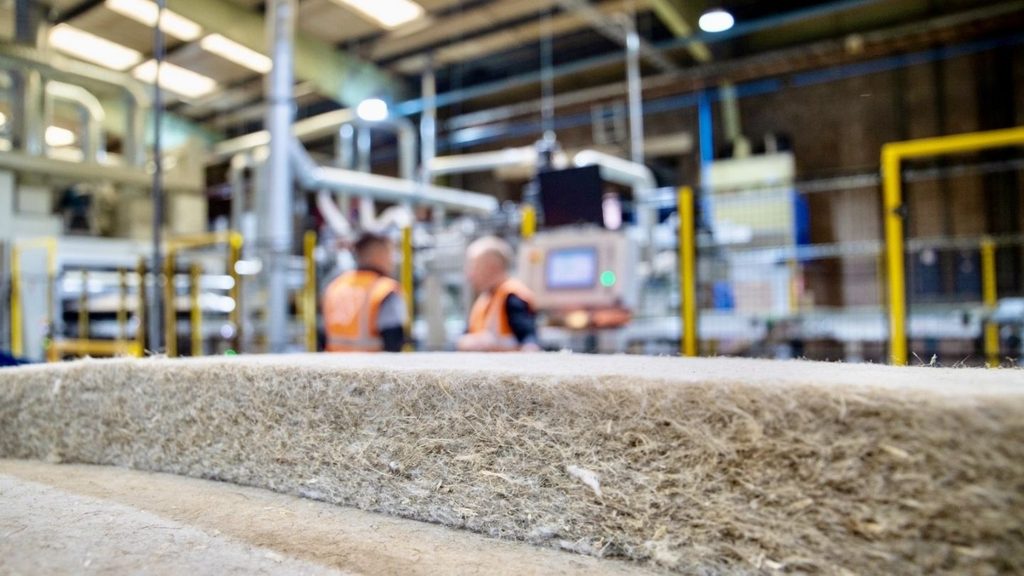
Founded in 2016, IndiNature is a Scottish developer and manufacturer of natural fiber insulation products. The company turns natural fibers, including UK-grown industrial hemp, into insulation products for the construction industry. Today, around seven people work across the factory and operations, supported by a separate sales team.
In the beginning, IndiNature’s production setup was relatively straightforward. The company worked with a limited number of raw materials, which was manageable with spreadsheets. As volumes started increasing, however, managing individual parts of the operation was no longer enough.
“When the volume started picking up, we realized we needed to see the whole pipeline, from sales to production, shipment, and invoicing,” Supply Chain Manager Nina McKeown explains. “It was all being done in Excel, and we realized that wasn’t going to work.”
While the IndiNature team already had experience with large ERP platforms, implementing an enterprise-scale solution in a small business would have added unnecessary complexity. The team therefore began researching alternatives that would better match the business’s size and requirements.
“My background is SAP, and I realized that wasn’t going to be the right way to go for us,” McKeown says.
IndiNature evaluated several alternatives, including Sage, while comparing the systems in terms of cost, efficiency, and flexibility. The company ultimately decided that MRPeasy offered the best combination for its requirements.
Implementing ERP in just a couple of months
The company began setting up the software in the second half of 2022 and processed its first shipment through MRPeasy on November 2. With relatively little legacy data to migrate, implementation took only a couple of months.
“It was quite a quick implementation, to be honest,” McKeown says.
The more substantial work involved agreeing on how IndiNature wanted to structure its data and processes. Decisions had to be made around product codes, product groups, naming conventions, and other internal standards. Once those decisions were made, translating them into MRPeasy was straightforward.
“We all had different backgrounds from different systems, so at first MRPeasy took some getting used to,” McKeown says. “But as soon as you get into it, it’s so easy.”
Deeper use brought more detailed questions
After roughly a year of using MRPeasy, IndiNature had become much more familiar with both the software and its own requirements. The company had also integrated MRPeasy with Xero and wanted to improve areas such as accounting processes, cost follow-up, bills of materials, packaging, and operating routines.
At this stage, the company engaged Smart Manufacture, an authorized MRPeasy consultancy, to provide additional implementation expertise. Rather than resolving fundamental problems with the system, the work focused on refining how IndiNature used MRPeasy as its processes matured.
One system across orders, inventory, purchasing, and production
MRPeasy is now used across a large part of IndiNature’s operation, with each customer order running through the system from quote to production, and ultimately to shipping and invoicing.
“We use customer order creation, shipments, stocktaking, inventory, placing orders to vendors, manufacturing, and all the documentation that comes with shipping,” McKeown says.
For McKeown, three areas stand out as particularly important: production tracking, control over raw material inventory, and order processing. Bringing these processes together gives the company a clearer picture of what is happening across the operation without having to manually consolidate information from different spreadsheets.
Better cost information supports margin control
Cost tracking has also become an important part of IndiNature’s everyday use of MRPeasy. Having manufacturing, purchasing, and inventory information in a single system helps the company remain profitable.
“MRPeasy helps us keep an eye on production costs and make sure our margins are healthy,” McKeown says. “We use the cost tracking feature almost daily.”
Customer orders are visible from order to delivery
The centralized order information also benefits customer service. When customers contact IndiNature about an order, the team can quickly check its status instead of looking through separate spreadsheets or asking different departments for an update.
“I can very quickly see where the order is in the system and when it’s going to be delivered,” McKeown says.
IndiNature has also made extensive use of MRPeasy’s custom fields. These allow the company to adapt records to its own information requirements and give different departments access to the details most relevant to their work.
“I really love the custom fields,” McKeown says. “Sales might look at one thing, finance might look at something else, so everybody in the organization can use the information they need.”
Lot tracking brings traceability to the finished product
Traceability is another part of IndiNature’s manufacturing workflow. The company uses barcodes and lot numbers to carry the relevant information from material lots through production and ultimately to product labels.
“MRPeasy provides us with end-to-end traceability,” McKeown says. “We don’t have issues very often, but if something occurs, we know exactly which batch it was.”
A system that supports a scaling company
For a scaling company like IndiNature, McKeown rates MRPeasy extremely highly for its ability to support the manufacturing operation.
“I would say MRPeasy is easily a nine or a ten,” she says. “At the level we are right now, as we scale up, it’s the perfect system.”
Having gone from spreadsheets to a connected manufacturing management system, McKeown’s advice to other small manufacturers considering the same move is straightforward: implementing an ERP or MRP system need not be as intimidating as it may initially appear.
“Don’t be scared to use it, because it’s so easy. Take the jump. It’s worth it. Don’t wait.”
You may also like: How a Skincare Manufacturer Built Operational Control During 1,000% Growth
Get manufacturing know-how delivered to your inbox!