Copacking – What is Contract Packaging and How to Manage It?
Copacking gives manufacturers a practical way to handle packaging without taking on the full cost of more equipment, labor, or floor space. It can add flexibility and expand capacity, especially when specialized packaging is needed. But it only pays off when the process is managed well and is cost-effective.
What is copacking or contract packaging?
Copacking or contract packaging is an outsourced packaging service in which a third-party company handles part or all of the packaging process for a manufacturer or brand. The work may include filling, sealing, labeling, cartoning, kitting, or other packaging steps needed to get products ready for distribution. In practice, copacking helps companies manage packaging demands without adding the full cost of new lines, added labor, or more plant space.
For manufacturers in the food and beverage industry, nutraceuticals or pharmaceuticals, cosmetics, and other consumer packaged goods, co-packing is often a practical way to solve packaging constraints. It can add capacity, provide specialized packaging support, and give manufacturers more flexibility when demand shifts.
It can also offer a lower-risk way to test a new product. That’s why copacking is often used not just to ease workload, but to support growth and product development without expanding every packaging function in-house.
Co-packing vs private label
Private label is a business model in which one company makes a product and another company sells it under its own brand name. For example, a retailer may source a supplier-made snack, supplement, or cosmetic product and market it as part of its own product line. In that arrangement, the buyer is not outsourcing packaging for its own product. It is buying a supplier-made product and branding it as its own.
It helps to think of co-packing and private label as solving two different problems. Co-packing helps a company package a product it already owns or controls, while private label helps a company bring a supplier-made product to market under its own name, sometimes by using contract manufacturing to create the product.
That distinction matters because the operating model is different in each case. With co-packing, the focus is on packaging capacity and execution. With private labels, the focus is on product sourcing and branding.
The benefits of copacking
The main appeal of copacking is that it gives manufacturers room to grow without forcing every packaging function to stay in-house. Instead of investing in more equipment, labor, and space, a small business can use outside packaging support to stay responsive, streamline the supply chain, and keep production moving. That makes copacking especially useful when demand shifts or packaging requirements become more complex.
- Lowers the need for upfront investment in packaging lines.
- Gives access to outside labor, product packaging equipment, and outsourced packaging materials.
- Makes it easier to handle seasonal spikes or short production runs.
- Helps test new products with less operational risk and easier scalability.
- Expands available packaging options without building new internal capability.
- Can improve speed and flexibility when internal resources are tight.
Still, copacking is more than a simple handoff. Once another company becomes part of the packaging workflow, the process needs to be planned and managed carefully. That starts with understanding what the copacking process actually looks like and which services a co-packer may provide.
Copacking stages and services
Copacking usually unfolds in stages rather than as one simple handoff. A manufacturer begins by defining the product requirements and packaging specifications, then evaluates co-packers, assigns responsibilities, coordinates materials, and confirms how production and quality will be handled. Trial runs may come next, followed by regular production and whatever finished-goods storage, return, or distribution the agreement calls for.
Successful copacking depends on more than outside packaging capacity. It depends on how well the work is coordinated from one stage to the next. It also depends on choosing a co-packer whose capabilities and certifications match the job.
Types of copacking services
Not all co-packers offer the same level of support. Some focus on basic packaging design and execution, while others offer a broader range of services that can include assembly, labeling, repackaging, and fulfillment. That makes it important to understand not just whether a co-packer has capacity, but whether its capabilities fit the job.
- Primary packaging. Filling, sealing, bottling, pouching, or other work that puts the product into its immediate package.
- Secondary packaging. Filling pouches, case packing, shrink wrapping, bundling, or display-ready cartons for shipping to retailers.
- Labeling and relabeling. Applying product labels, regulatory labels, barcodes, date codes, or market-specific packaging changes.
- Kitting and assembly. Combining multiple items into one package, promotional pack, sample kit, or bundled offer.
- Repackaging. Moving products into new packaging formats, updated packaging, or revised pack sizes.
- Specialty or compliance packaging. Handling packaging that requires tighter control, special labeling, traceability, or other category-specific requirements such as FDA regulations for food products and pharmaceuticals.
- Warehousing and fulfillment support. In some cases, storage, order prep, or direct shipment is offered after packaging is complete.
As the service scope expands, so does the need for better coordination across inventory, scheduling, and quality control.
How to manage copacking in your production system?
Managing copacking well means keeping control of materials, schedules, and inventory even when packaging work happens outside your own facility. Once a co-packer is involved, the challenge is no longer just getting the product packaged. It’s making sure that outsourced work stays connected to purchasing, production planning, inventory records, and quality control.
- Track what goes out. Keep clear records of raw materials, packaging components, or semi-finished goods sent to the co-packer.
- Track what gets used. Monitor what inventory is consumed during the packaging process so stock records stay accurate.
- Record what comes back. Make sure finished goods returned from the co-packer are received correctly and tied to the right orders and quantities.
- Keep schedules aligned. Coordinate outsourced packaging steps with production process timelines, delivery windows, and replenishment needs.
- Maintain traceability. Preserve accurate BOM, lot, and batch records so quality control and recall readiness don’t break down once work moves outside your facility.
Handled well, those control points make copacking much easier to manage as part of the wider production system. Handled poorly, they create gaps in visibility, inventory accuracy, and scheduling.
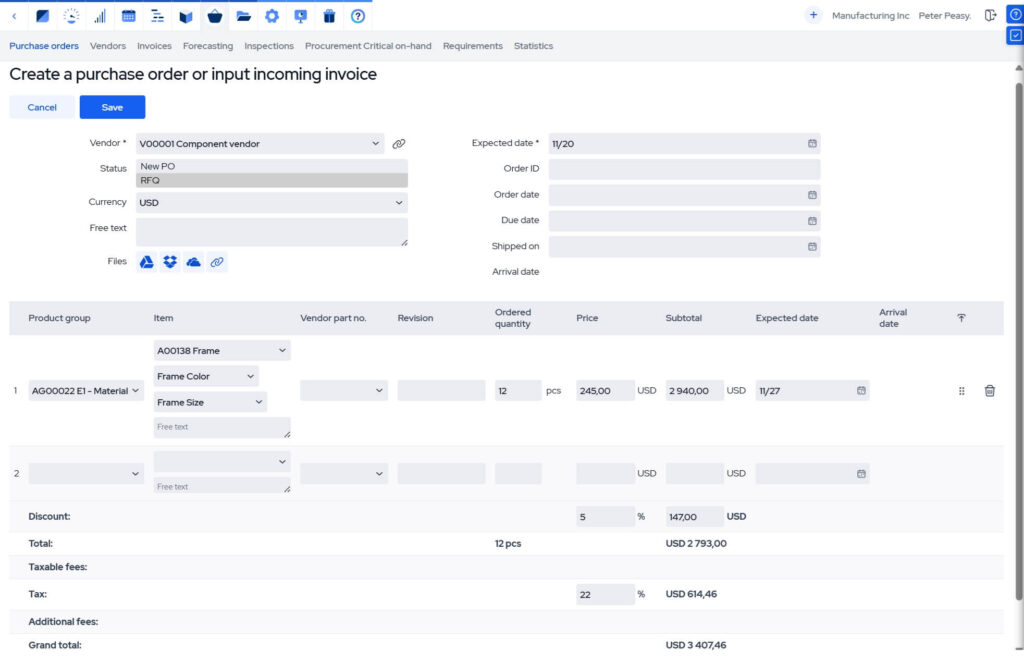
That’s why manufacturers often manage outsourced packaging through a manufacturing ERP system with subcontracting capability. This ensures materials, inventory, and production records stay connected throughout the entire process.
When to consider subcontracting packaging
Manufacturers often consider subcontracting their packaging to a co-packing company during periods of change. That might mean a new product launch, a seasonal spike in demand, a packaging change, or growth that starts to strain internal capacity. In those situations, copacking can be a practical way to add flexibility without committing right away to more equipment, labor, or floor space to box up and ship their final product.
Still, subcontracting packaging works best when it supports a broader production process strategy. It shouldn’t be a quick fix for weak planning or poor visibility. The economics have to make sense to realize any cost savings.
Quality assurance expectations have to be clear. Additionally, the manufacturer still needs a reliable way to manage materials, schedules, and communication across both sides of the operation. This is usually accomplished by using a good ERP or MRP software solution that includes modules for contract packaging tracking and monitoring the finished product.
How to choose a co-packing partner
Choosing a co-packing partner that packages products for you is about more than comparing quotes and getting pricing on packaging solutions. The right fit depends on whether the co-packer can handle your product, packaging format, volume requirements, quality expectations, and pace of work. A partner may look good on paper, but if its capabilities, communication, or process control don’t match the job, the relationship can create more problems than it solves.
That’s why it helps to evaluate co-packers for core competencies, capability and reliability.
- Product and packaging fit. Ask what products and packaging formats they already handle.
- Realistic capacity. Find out what volumes they can actually support and still produce a high-quality output.
- Material responsibilities. Clarify who supplies ingredients, materials, and packaging components.
- Quality and traceability. Ask how they handle quality assurance issues, changeovers, and lot traceability. See if they meet current ISO standards.
- Reporting and visibility. Find out what reporting you can expect during and after production.
- Validation options. Ask whether they can support pilot runs or smaller validation work before a larger commitment.
Packaging company site visits, pilot runs, and reference checks can also reveal whether the operation is as strong as it seems and will meet your production needs.
Red flags to watch for
Some warning signs should be taken seriously early in the vetting process.
- Vague process control. Unclear answers about quality assurance procedures, changeovers, or traceability.
- Weak documentation. Limited reporting, poor records, or inconsistent operating details.
- Unclear responsibilities. No clear split for materials, packaging components, finished goods, or quality ownership.
- Poor transparency. Reluctance to share references, allow a site visit, or discuss past performance.
- Unstable commitments. Signs that capacity, lead times, or scheduling promises may not hold up.
That’s why it pays to vet a co-packer thoroughly rather than going with the first available option. The co-packer may be a behind-the-scenes partner, but if it falls short, the damage can reach far beyond packaging and into customer experience and brand reputation.

Copacking works best when managed through manufacturing software
Copacking can help manufacturers grow faster, expand packaging capacity, and stay flexible without bringing every packaging process in-house. But to make it work long term, outsourced packaging cannot sit outside the rest of the operation. That’s where a manufacturing ERP system becomes essential.
Instead of tracking co-packing work through spreadsheets, emails, or manual stock updates, integrated software enabvles managing it as part of the normal production flow. This gives a clear view of what materials were sent out, what was used, what finished goods came back, and how the subcontracted step affects stock levels, production timing, and order fulfillment.
MRPeasy helps simplify copacking workflows by letting manufacturers manage subcontracted operations inside the same system they use for production, purchasing, and inventory. A company can issue materials to a co-packer, track outsourced packaging as part of the production process, receive the finished goods back into stock, and maintain lot traceability throughout. This keeps the outsourced packaging step visible and connected instead of turning it into a blind spot.
Key takeaways
- Copacking is the outsourcing of packaging work to a third-party provider that handles tasks like filling, sealing, labeling, kitting, or repackaging. It helps manufacturers add packaging capacity without investing in more equipment, labor, or space.
- Copacking is useful when demand shifts, packaging requirements become more complex, or a company wants to test new products with lower operational risk. In these cases, copacking can provide flexibility and faster scalability.
- Copacking only works well when responsibilities, materials, schedules, and quality expectations are clearly defined. Without strong partner coordination, it can create visibility gaps, stock inaccuracies, and planning issues.
- Manufacturers need to track what materials go to the co-packer, what gets consumed there, and what finished goods come back. Keeping those records tied to orders, inventory, and traceability is essential for control.
- Choosing the right co-packing partner means looking beyond price. The best partners have the right capabilities, realistic capacity, strong process control, and clear reporting that supports reliable day-to-day operations.
Frequently asked questions (FAQ)
Copacking, or contract packaging, is when a third-party company handles packaging work for your product. This can include filling, sealing, labeling, kitting, or repackaging. It helps manufacturers add packaging capacity without expanding in-house operations.
With copacking, you own the product and outsource the packaging. With private label, another company makes the product and you sell it under your own brand. Copacking is about packaging execution, while private label is about sourcing and branding.
Copacking starts with agreeing on the product, packaging requirements, materials, and responsibilities. The co-packer then completes the packaging work and returns, stores, or ships the finished goods. Good copacking depends on clear coordination, traceability, and inventory control.
Compare the full costs of packaging in-house against the total cost of outsourcing it. Look beyond labor and equipment to include floor space, supervision, downtime, changeovers, scrap, inventory handling, and the cost of underused capacity. For many SMEs, copacking starts to makes sense when volumes are too low to justify dedicated equipment or specialized packaging would be too expensive to build internally.
You may also like: What Is Distributed Manufacturing?
Get manufacturing know-how delivered to your inbox!