How a Small Composites Manufacturer Achieved 98% Inventory Accuracy
After implementing an ERP, Light Composites has improved inventory accuracy and nearly eliminated stockouts. “Recently, we did an inventory check, and we were within 97 to 98% of what the system says we should have,” says Ryan Hosmer, CEO.
Company: Light Composites
Industry: Composites
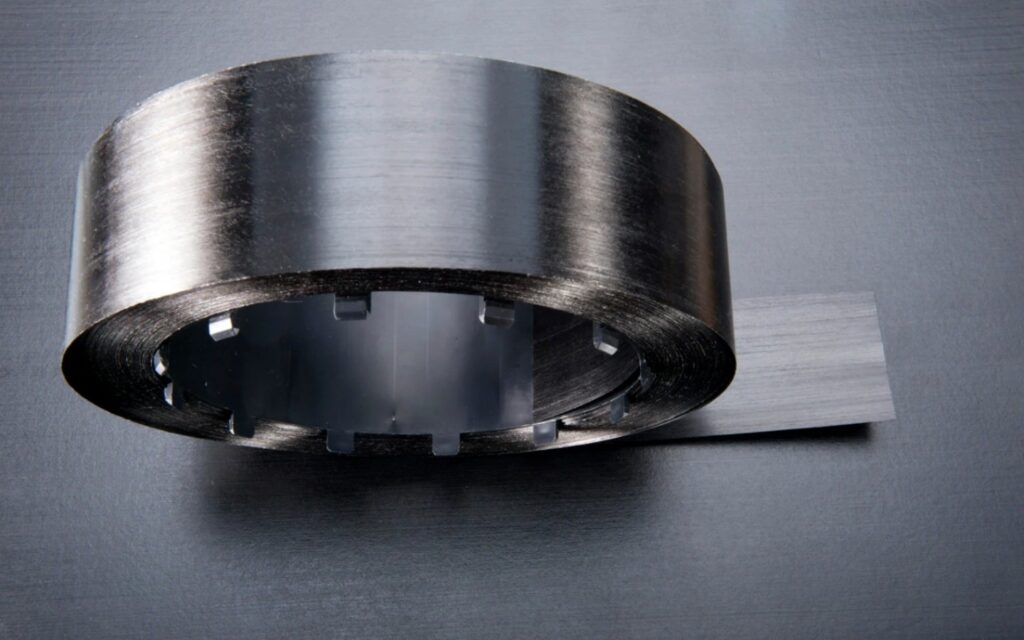
Product: High-performance carbon composite components for aerospace and medical applications
Location: San Diego, California, USA
Company size: 55 employees
Previous system: Paper system and spreadsheets
Pain points: Lack of serial number traceability, fragile inventory tracking, frequent stockouts, forecasting issues, no capacity visibility, and a lack of scalability
Implementation time: Nearly 6 months, self-implemented through a gradual rollout
Key functions: Inventory management, serial number tracking, production reporting, traceability, quality management, forecasting, production planning, and capacity management
Results: 97–98% inventory accuracy, near-elimination of stockouts, faster traceability, easier quality management, better forecasting and capacity visibility, and greater confidence to take on additional work
From bicycle saddles to medical and aerospace composites
Light Composites is a San Diego–based manufacturer of high-performance carbon composite components for the aerospace and medical industries. Founded in 2016, the family-owned company is led by CEO Ryan Hosmer and General Manager Andy Hosmer. The company employs 55 people and is growing.
Although the company was formed in 2016, its roots go back further. The Hosmer family previously operated a business manufacturing leather bicycle saddles for ultra-distance riders.
When they set out to create a carbon fiber saddle and were unable to find a local manufacturer, they decided to produce the material themselves.
That decision led to the formation of Light Composites, which went on to produce patient positioning parts for medical applications and structural components for unmanned aerial vehicles (UAVs).
Scaling beyond spreadsheets
Back when Light Composites was still a small company, Ryan and Andy got by without a dedicated ERP system. However, as the company continued to grow, they knew their current way of doing things wasn’t enough. They lacked serial number traceability, their inventory tracking was fragile, forecasting was nearly impossible, and capacity visibility was nonexistent.
“We were doing everything on a paper system and Excel spreadsheets,” Andy says. “Somehow, we were able to hold it all together, but we couldn’t scale.”
Looking for a solution, they tried out several different ERP systems. However, the first software they tried was desktop-based and severely outdated. Another required extensive onboarding and too many workarounds.
“There were a number of features it didn’t support that we thought we could get around, primarily serial number tracking. I’d say 90% of our products are serialized, so it’s a huge deal for us. However, the workarounds weren’t manageable at scale,” Andy explains.
After exploring several options, Ryan and Andy recalled a software they had come across years earlier – MRPeasy. When they first heard about it, the company was still very small and didn’t need such a system. But now seemed like the perfect time to revisit.
A system they could deploy themselves
From the outset, Ryan and Andy were impressed with MRPeasy. One of the things they liked most was the ability to explore all its functionalities for free, without having to go through a sales pitch.
“What I loved was that I didn’t have to talk to a salesperson. I could log in, start a trial, and test it that night,” Ryan explains.
With strong technological backgrounds, Ryan and Andy both tested the software on their own. They relied on MRPeasy’s extensive self-help resources and AI chatbot to learn how the system worked. After thorough evaluation, they realized it could do everything they needed, so the choice to move ahead with MRPeasy was clear.
Onboarding was straightforward, and they credit MRPeasy’s support team for making the process manageable.
“Support was really responsive in answering our questions early on. It was a painless experience for us to onboard,” Ryan explains. “We didn’t have to engage a consultant or have someone on-site for a month rolling it out.”
Building confidence through an incremental rollout
Instead of launching the system all at once, Ryan and Andy chose to implement MRPeasy gradually. This allowed them to build confidence with minimal disruption to their daily operations.
They began with a single, well-understood part number that shipped weekly. Once they successfully implemented that part in the software, they added another, then another, gradually expanding usage. For nearly six months, they ran MRPeasy in parallel with their paper-based system, until they finally decided to completely transition.
“We finally just said enough with the paper. Even if there’s some pain, we’re going live,” Ryan says.
Training their employees on how to use the system properly has been crucial to the success of their implementation. Shop floor workers use the production reporting functionality daily, while Andy checks the software every morning for live production updates.
Today, out of the company’s 55 employees, 45 use the system regularly, showing just how central MRPeasy has become to their daily operations.
No more Friday afternoon panic calls
One of the biggest benefits of using MRPeasy has been a significant reduction in stockouts. Before using the software, it wasn’t clear when they were low on materials, which led to frequent stockouts.
“We used to have these Friday afternoon phone calls to our vendors like, ‘Oh my gosh, we just ran out of this critical material,’” Ryan explains.
However, after training their staff to report materials through the system, they gained much better oversight of stock levels. Now, when someone asks whether a part is available, the simple answer is “check MRPeasy”. Finished goods are tied to specific warehouse locations, and quantities are typically over 95% accurate.
“As a result of implementing MRPeasy, those frantic, last-minute phone calls simply don’t happen anymore,” Ryan says. “Recently, we did an inventory check, and we were within 97-98% of what the system says we should have. Eliminating stockouts has been a godsend. Because if you can have the order but you can’t ship it, you’re not going to make the money.”
Built-in compliance that auditors like
Having better serial number tracking was another benefit Light Composites realized from MRPeasy.
“We don’t get asked for root cause and corrective action all the time, but when we do, it’s extremely important,” Ryan maintains.
Previously, if a customer’s products required serial numbers, the team would have to copy a list from a database and transfer it to the invoice. Then, if there was an issue with a product down the road, it took tremendous effort to figure out who made it and when, or where the material came from. After switching to MRPeasy, serial number tracking is much easier.
“Now, if we ship something to a customer and there’s an issue, they can reference the serial number or the lot, and we can immediately see who made it, when, and what materials went into it,” Andy says. “At that point, we have a high degree of confidence that the material it says went into it actually did go into it, and that the labor recorded actually happened.”
As an ISO 9001 and AS9100 compliant manufacturer serving the aerospace and medical industries, Light Composites must also uphold strict quality management standards. With MRPeasy, quality management is now supported by real-time production data. Documentation is centralized, traceability is reliable, and potential quality issues can be identified early on.
“MRPeasy allows us to more easily administer our quality management and identify issues earlier on. Our auditors like it,” Andy explains.

Better visibility across operations
For Light Composites, forecasting used to require so much effort that it simply wasn’t worthwhile. The necessary data existed, but it was scattered across spreadsheets, paper records, and disconnected systems. Now, with MRPeasy, Ryan and Andy can make accurate projections with far less effort.
“It’s very easy for us now to see what the next three months are going to look like, month by month,” Ryan explains. “We can look at what the sales are, what the cost of goods and expenses are going to be. Then we can make a projection and feel really good about what the next three to six months will look like. Before MRPeasy, pulling all of that data together was almost impossible.”
By gaining a deeper understanding of how the system’s functions work together and fine-tuning routings, workstations, and available hours, Ryan and Andy have also uncovered capacity that was previously hidden from them.
“We’ve been using MRPeasy for two years, and we’ve seen the benefits. But right now, we’re also realizing some significant capacity gains that were kind of hidden because we just couldn’t see them,” Andy says.
That improved visibility has given Light Composites the confidence to take on additional work, and the result is measurable growth.
“By the end of 2025, we’re expecting to reach about 1.5 times last year’s revenue,” Andy says. “And we couldn’t do that without making sure we’re not running out of material, knowing the capacity is available, and clearly communicating to the staff what’s next and what the priorities are.”
You may also like: Fire Protection Manufacturer Grows by 25% First Year of Going Live with MRP Software
Get manufacturing know-how delivered to your inbox!