Supply Chain Visibility – Importance and Solutions
In the old days, every part of a supply chain was made up of trading partners who knew each other by name. Transactions were sealed with a handshake or a phone call. But with the global supply chains of the 21st Century, supply chain management has become more complex.
What is supply chain visibility?
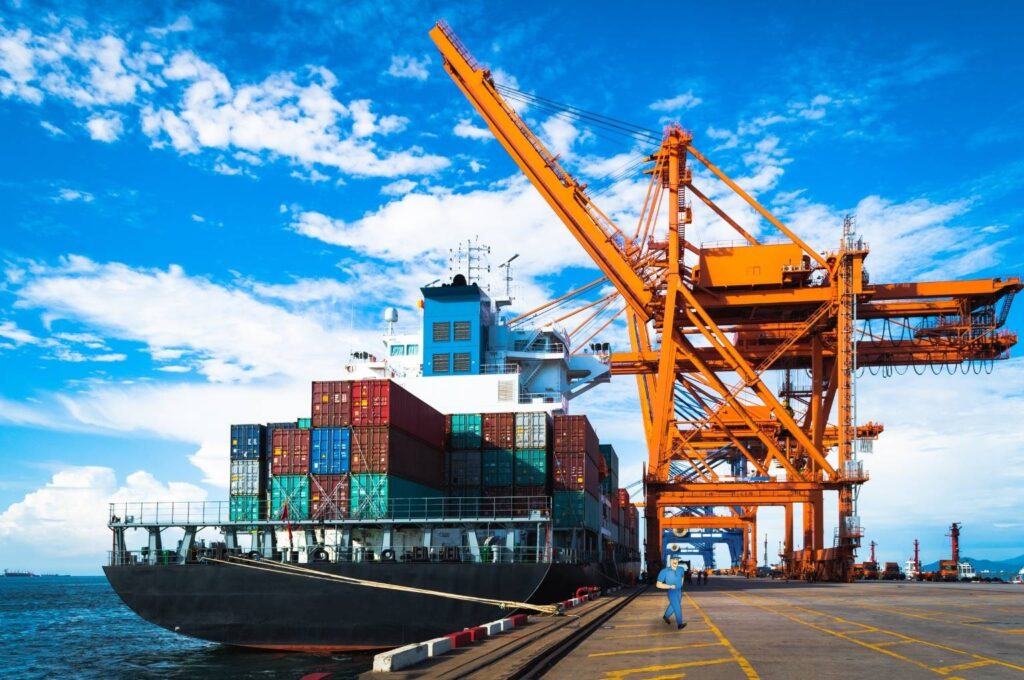
Supply chain visibility is the ability to track every aspect of your product supply chain from raw materials suppliers to the end-user or customer. It includes shipping time, inventory levels, as well as ordering, warehousing, and distribution.
In a paper published in the “International Journal of Production Economics” in June 2022, the authors define supply chain visibility (SCV) as: “the extent to which actors within a supply chain have visual access to the timely and accurate demand and supply information that they consider to be key or useful to their operations and supply chains.”
Three key words in that definition are timely, accurate, and useful. In this article, we’ll look at each of these and discuss additional benefits and challenges to SCV.
Why is visibility important in supply chains?
Supply chain visibility is crucial for any business to maintain operational efficiency. This applies all up and down the board, from suppliers to retailers. SCV allows a company to see and understand what’s going on across its supply chain in real time.
Better visibility allows them to make informed decisions, particularly when there are unexpected disruptions in the raw materials supply chain.
Even wholesalers and retailers need to have a good grasp on how disruptions will affect their sourcing of finished goods. This is necessary to maintain a high level of customer satisfaction and eliminate inefficiencies in maintaining proper inventory levels, avoiding stockouts and/or overstocking circumstances.
Challenges and barriers to implementing supply chain visibility
Perhaps one of the biggest challenges to maintaining end-to-end supply chain visibility is the sheer vastness of the global network of suppliers and providers. As I mentioned at the beginning, we no longer live in an era when your raw materials supplier was in your local region, nor your customer just down the street. The data sources you need are literally coming from around the world.
Challenges to supply chain visibility
Because of the global supply chain, real-time insights must often rely on cloud-based data gleaned from a myriad of sources. Since this data could be coming from anywhere in the world and at any time of day or night, data analytics require more than just a pencil and a spreadsheet.
In the paper mentioned above, the first challenge faced is actually having the factors in place to achieve supply chain visibility. They can be broken down into three categories:
- People – culture, collaboration among departments and between supply chain partners, trust in the system, and organizations involved.
- Processes – business alignment, information sharing, and information quality.
- Technology – hardware/software for production process data collection and evaluation, data security and integrity measures, connectivity to populate the supply chain with pertinent information.
Challenges may be difficult to overcome, but when they’re met, they allow for better visibility that increases operational efficiency and enhances global trade.
Barriers to supply chain visibility
While there are several challenges to optimizing supply chain management and visibility, there are a few barriers that simply must be overcome.
The first is internal factors. Often, budget constraints may limit a business’s entry into the process, particularly SMBs. However, by using a scalable software solution, the company can start with an affordable entry-level program and ramp up as fiscal value is both seen and realized.
Another internal barrier is that of poor data quality. This normally stems from manual record-keeping practices. Again, good ERP software with visibility capabilities included is a way through this roadblock to supply chain visibility.
Externally, there may be barriers inherent to the supply chain structure itself. Some of these are:
- Disparate sources of information. For example, not having the same nomenclature for identical raw materials, components, or even finished products.
- Lack of standardization can become an issue. For example, how and when data is collected and shared, not employing similar types of databases, and using the same monetary and numerical or statistical standards.
- For a single corporation just starting to explore data visibility, the lack of skills and knowledge for implementing the system is prevalent. Training on the systems used is imperative.
- Finally, the complexity of the supply chain itself can be a barrier on several levels. For example, studies have shown that supply chain complexity can prevent companies from seeking to implement SCV upstream, and that many companies will need to invest more capital and levels of investment to deal with higher levels of supply chain complexity.
8 benefits of supply chain visibility
With supply chain visibility in place, there are numerous benefits for businesses. Because they can see what’s happening in the supply chain in real time, better decisions can be made. Here are seven benefits you can expect with real-time tracking of the supply chain.
1. Reduced risk from disruptions
Problems like supplier delays, material shortages, quality issues, and transportation bottlenecks are spotted early. This reduces the risks of production shutdown or delayed customer deliveries. One huge example of a transportation bottleneck was on March 23-29, 2021, when the cargo ship Ever Given ran aground in the Suez Canal, blocking all traffic. The sooner you knew, the better you could protect your business from the ensuing bullwhip effect.
2. Improved inventory management and control
When inventory levels across locations and stages are visible to relevant parties, inventory management is more effective. This is particularly critical for products or components that have a long lead time or are high-cost items. This allows the business to:
- Avoid overstocking, tying up capital.
- Reduce potential stockouts that stop production or result in lost sales.
- Intelligently balance safety stock.
3. Better demand forecasting and planning
When a company has access to up-to-date supply chain visibility, it aligns accurate real-time demand forecasts with actual supply conditions.
This gives the business:
- More reliable production scheduling potential.
- A reduction in last-minute schedule changes, which allows for better capacity utilization.
- Better coordination and collaboration between purchasing, production, warehousing, and logistics.
4. Stronger supplier relationships
When every supply chain partner has access to the same performance metrics, it promotes accountability and collaboration. These metrics include lead times, fill rates, quality issues, and other supply and production factors. Building up these relationships helps streamline your efforts in supply chain management and protects your critical supplies.
Continue reading about supplier relationship management.
5. Improved customer service
Customers, retailers, and wholesale distribution centers care about two things besides cost: availability and reliability. A resilient supply chain is essential to meet customer expectations. When you can provide them with accurate delivery dates, proactive communication about delays, and maintain consistent service levels, you go a long way toward building trust and long-term loyalty.
6. Support for cost control and profitability
If you want to reduce your expediting costs, optimize your warehousing and transportation usage, and reduce rework and waste expenses, supply chain visibility can help. It helps you understand where valuable time, money, and materials are being lost or wasted. This is a key factor in business sustainability as well.
7. Improved response to compliance and regulatory issues
For companies operating in regulated industries, supply chain visibility also supports compliance. When you can trace materials, batches, shipments, and supplier data across the supply chain, it becomes much easier to maintain accurate records and respond quickly to audits, recalls, or documentation requests. This is especially important in sectors like food and beverage, pharmaceuticals, and chemicals, where traceability and condition monitoring are often essential.
Better visibility also reduces the time and confusion involved in identifying affected products or suppliers when something goes wrong. Instead of digging through disconnected records, teams can isolate issues faster, support root-cause analysis, and show that proper controls are in place. That lowers compliance risk while strengthening operational confidence.
8. Smarter and more effective use of technologies
We’ll look more at supply chain traceability tech in a minute. But most businesses, including SMEs, are using some kind of technology software or system in their operations.
As the computer programmer saying goes: Garbage in, garbage out. Supply chain analytics and MRP systems will only work accurately if the data they’re provided is accurate. Visibility is foundational for everything from automation and predictive analytics to demand forecasting and AI-driven planning.
To sum it up, supply chain visibility helps businesses of all types to move from reactive firefighting to proactive decision-making. The three biggest outcomes are cutting unnecessary costs, improving operations reliability, and strengthening the trust your customers have in you.
How to increase supply chain visibility?
In order to increase or even begin taking advantage of supply chain visibility, it’s fundamental to nail down the human and organizational factors involved first. Without beginning there, your technologies, no matter how good their functions are, will end up either underused or even misused.
Leadership alignment and ownership
It’s imperative that your supply chain visibility efforts are supported from the boardroom door down. Upper management must understand that this isn’t an IT project. It’s a strategic initiative that will affect the company’s bottom line.
Everyone needs to work to align operations, procurement, logistics, and finances that meet shared goals. While everyone is involved, clear ownership of the project should be assigned, possibly to a designated supply chain manager or, in many cases, a cross-functional leader.
Collaboration among all departments is key
Many organizations operate with a silo mentality. This won’t work if supply chain visibility is to work effectively. The barriers that separate raw materials procurement, production and scheduling, warehousing, and sales must be removed.
They all must have a hand in establishing shared KPIs (key performance indicators) for successful implementation. Department-specific metrics must be aligned to fit in the entire picture. Regular, transparent communication must be encouraged across all teams. This helps each team understand how their decisions and performance impact upstream and downstream supply chain management.
Standardize everything in the process
If everyone is doing their own thing in their own way, visibility is nearly impossible. Some of the things to standardize are:
- Data collection, nomenclature, and reporting methods.
- Documented workflows for everything from purchasing to supplier communication. Be sure to include inventory management, order processing, and fulfillment.
- Turn institutional knowledge into documented processes. Draw on the knowledge of skilled workers, but make sure it’s available for everyone, regardless of experience.
Define clear goals and achievable success metrics
Before adopting any visibility tools or tech, the business must define at least three things:
- What better supply chain visibility actually means in their context.
- What decisions they want to improve and in what order (forecasting, inventory, scheduling, etc.)
- How success will be measured. What will it look like when it’s achieved?
Remember, clear goals and objectives must always come first. Technology supports strategies. It’s not the other way around.
Let’s move on to technology. But always keep in mind that supply chain visibility and supply chain management don’t start with tech. It starts with people, processes, and a transparent culture.
Supply chain visibility technologies
The most obvious justification for using technology is to move from manual, error-prone ledgers and number crunching to more efficient digital methods of tracking and analyzing data. Technology doesn’t replace effective decision-making. It supports and reinforces it. It promotes a single source of truth and accuracy across the entire supply chain if implemented properly.
Basic supply chain technology
There are four main data types modern supply chain tech tracks.
- Inventory data, such as on-hand, in-transit, and safety stock.
- Order and demand data.
- Supplier and vendor information, as well as lead-time data.
- Logistics and transportation data.
To be useful, the technology must have some foundational digital capabilities. For example, it needs to be able to handle data capture and sharing. It should have system connectivity and integration readiness with other systems and more advanced tech. It must provide real-time visibility, or at the very least, near real-time visibility. Yesterday’s data won’t help today’s visibility requirements.
By now, most companies have advanced beyond manual ledgers. While there are highly advanced tools for implementing supply chain visibility, here are the minimum requirements:
- Smart spreadsheets apps with shared databases, or better, relevant features within an ERP system.
- Apps for handheld devices to access the data outside of the office.
- Supplier portals and share dashboards to increase transparency and collaboration.
These basic tools help get the ball rolling in risk management without overwhelming your staff. But eventually, you may need to employ more advanced technologies or integrate what you already have with something more robust.
Advanced technologies for supply chain visibility and management
As your business grows, and supply chain visibility requirements and regulations evolve, you may need to invest in more advanced technologies and integrations. Here are some additional supply chain visibility solutions and enhancements.
Internet of Things (IoT)
For almost granular supply chain tracking, IoT promises real-time tracking using embedded sensors in equipment, vehicles, and containers. This enables continuous tracking using live data and doesn’t require manual input.
You’ve probably seen this at work when ordering from online 3PLs like Amazon. The trucks have IoT tracking devices so you can follow the truck en route to your location.
The goal is to improve coordination between manufacturing, warehousing, and logistics. This gives teams a chance to intervene quickly when delays or equipment issues occur. The early detection and response can often keep small issues from escalating into emergencies that cause supply chain disruptions.
Sensors and smart devices
Used mostly for in-facility tracking purposes, these devices may use IoT or more localized IIoT (Industrial Internet of Things) to transmit data in real-time. For inventory and goods tracking, RFID (radio frequency identification) tags or barcodes and barcode readers are used for item-level visibility. For the most part, they use automated scanning, which reduces human error and labor resources.
For instances when environmental condition monitoring is required, sensors can track temperature, humidity, vibration, and shock. This is crucial for regulated or sensitive goods like food, pharmaceuticals, electronics, and some volatile chemicals.
Because manufacturing production equipment is a vital part of your internal supply chain, machine sensors are useful. They provide insight into machine performance, uptime, and maintenance requirements. This allows your team to schedule preventive and proactive maintenance tasks without disruptions in your workflow.
Blockchain and distributed ledgers
When used across the entire supply chain, these technologies provide the highest form of data integrity. This type of technology is a high-level SCM (supply chain management). Without getting too technical, here are some of the benefits:
- Shared, tamper-resistant data records are generated with a time-stamp that links it to previous entries. Data cannot be altered without consensus.
- Decentralized visibility without a single owner means that multiple supply chain partners have access to the exact same data. This reduces disputes caused by mismatched records or data inaccuracies.
- Smart contracts and automated verification using predefined rules will trigger actions automatically. This lowers administrative load and reduces manual reconciliation. For example, it will record POD (payment on delivery) confirmations as they happen.
- Enhanced traceability for raw materials and finished goods supports regulatory compliance, allows for faster recalls or callbacks, and assists in root-cause analysis.
Advanced analytics and artificial intelligence
With all the data flying in from every part of the globe for everything involved, it’s not humanly possible to make sense of it all. Advanced analytics, often powered by AI, can sift through huge amounts of data and turn it into usable insights.
Advanced analytics gathers data from the ERP, IoT devices, logistics, and supplier systems, identifying trends that could be easily missed with manual analysis. AI can recommend actions to prevent disruptions and optimize performance. With machine learning built in, the system utilizes continuous learning and improvement to create more accurate recommendations as more data is fed into the system.
Note that while it’s making recommendations, the final decisions should always be made by people in the company. There should always be an HITL (Human In The Loop) to make and take responsibility for final decisions.
Digital twins and simulation
Digital twins create a virtual copy of your physical supply chain. Think of it as a working model that mirrors your actual facilities, product flows, and operational constraints. These models pull in real-time data and historical information to behave just like your real-world operations. I’ve seen it used for machine maintenance and design, but it can also be applied to supply chain management.
Digital twins allow running “what if” scenarios without risking your actual operations. They can be simple or complex, depending on your needs. For example, what happens if your key supplier goes down? How would a sudden demand spike impact your system? Or, how would it affect your delivery timeline and costs if you needed to reroute shipments because a major transportation corridor was shut down?
Beyond troubleshooting, this technology supports your long-term strategic planning. Whether you’re designing your network for the next five years or planning major capacity expansions, having a digital model gives you confidence that your big operational decisions are based on solid data.

Supply chain visibility software platforms
You need something to tie all this information, hardware, and data into a usable package. Supply chain visibility software can be standalone or packaged with other solutions. Here are some options and considerations to think about.
Standalone supply chain visibility solutions
- These solutions focus specifically on tracking, logistics, or supplier visibility.
- They deploy faster with less customization complexity.
- They work well when you’re tackling specific problems or rolling out improvements in phases.
Integrated ERP and SCM platforms
- These are solutions with visibility capabilities built directly into your existing ERP, MRP, or SCM systems.
- Everyone works from the same data model across your operations.
- Creates stronger alignment between what you’re planning and what you’re actually executing.
Cloud-based vs On-premise systems
- Cloud platforms give you scalability and remote access without managing infrastructure.
- On-premise systems keep everything under your direct control if security or data governance requires it.
- Consider where your data needs to live and who needs to access it.
Interoperability and integration
- APIs and middleware connect different systems so they can share information.
- Data standardization and governance keep information consistent across platforms.
- Breaking down data silos means everyone sees the same picture of your operations.
Selecting the right technology stack
Selecting the right technology stack starts with matching your tools to your company’s actual size and operational complexity. There’s no point in implementing enterprise-level systems if you’re running a mini-sized operation. Conversely, outgrowing your technology creates expensive problems down the road.
Choose platforms that fit your current process maturity level. If your processes are still evolving, you need flexible systems that can adapt with you. Most importantly, plan for scalability from the start.
The last thing you want is to replace entire systems every few years as your business grows. Smart technology decisions today prevent costly migrations tomorrow.
Getting started with supply chain visibility
For most small and medium manufacturers, supply chain visibility isn’t about implementing million-dollar software platforms or transforming your entire operation overnight. It’s about knowing where your materials are, when they’ll arrive, and whether you can meet your customer commitments.
Start with the problems that are costing you the most money or causing the biggest headaches, then build from there. You don’t need large enterprise-level systems to get meaningful visibility into your operations. You need practical approaches that work with the resources you have and tackle one problem at a time.
Here’s how to build better visibility without breaking your budget, overwhelming your team, or trying to boil the ocean:
- Start with your biggest blind spots. Figure out where you’re operating in the dark. Is it inbound shipments that show up late? Work-in-process that gets lost on the shop floor? Customer orders you can’t track? Fix the pain points that cost you money or customers first.
- Get your suppliers talking to you. You don’t need fancy software to improve visibility – you need better communication. Set up simple check-ins with key suppliers about order status, potential delays, or capacity issues. A weekly email beats radio silence every time.
- Know what’s on hand and where it is. If you can’t see your own inventory clearly, external visibility won’t help. Get your internal systems straight first – accurate inventory counts, clear locations, and reliable updates when materials move.
- Set up early warning alerts. Identify the problems that always hurt you – late deliveries, low stock on critical items, production bottlenecks. Create simple triggers that alert someone when these situations develop, not after they’ve already caused a crisis.
- Share information with customers proactively. Don’t wait for customers to call asking where their order is. Give them visibility into order status, expected ship dates, and any delays before they have to ask. It builds trust and reduces your team’s time on status calls.
- Connect the dots between systems. Your purchasing system, production schedule, and shipping information don’t need to live in separate worlds. Even basic integration – or just regular reports that pull data together – helps you see the full picture.
Key takeaways
- Supply chain visibility is the ability to track every aspect of a product’s supply chain from raw materials suppliers to the end-user or customer. It includes shipping time, inventory levels, as well as ordering, warehousing, and distribution.
- Supply chain visibility is crucial for distributors and manufacturers as it enables more informed decision-making, particularly when there are unexpected disruptions in the raw materials supply chain. It’s also important for retailers, as foresight can guard against supply disruptions, which can hurt order fulfillment.
- Good supply chain visibility leads to better demand forecasting and planning, improved supplier relationships and supply chain resilience, improved customer service, and less stockout risk.
- Supply chain visibility initiatives fail when treated as IT projects alone. Alignment across departments, standardized processes, and shared goals are prerequisites for any visibility technology to deliver real value.
- For most SMBs, meaningful supply chain visibility begins by addressing the biggest blind spots, improving data accuracy, and connecting existing systems – then scaling tools and automation as complexity grows.
- Supply chain visibility is the foundation for advanced capabilities. Technologies like IoT, AI-driven analytics, and digital twins only work effectively when they’re built on reliable, shared, and real-time supply chain data.
Frequently asked questions (FAQ)
Improve supply chain visibility by standardizing data, aligning teams, and sharing information across procurement, production, and logistics. Focus on accurate inventory tracking, supplier communication, and real-time status updates across the supply chain.
Essential supply chain visibility tools include ERP or MRP systems, shared inventory databases, supplier portals, and basic analytics. As complexity grows, IoT tracking, system integrations, and real-time dashboards further enhance visibility.
Your first goal should be to identify your biggest blind spots, such as late supplier deliveries or unclear inventory levels. Fix internal data accuracy first, then improve supplier communication before investing in advanced technology.
You might also like: Top Warehouse KPIs for Small Businesses – What To Track and Why?
Get manufacturing know-how delivered to your inbox!