Industrial Control Systems Manufacturer Eliminates Stockouts and Overstocking
As its products grew more complex, Nexus ACS needed software to manage multi-level BOMs and to eliminate stockouts and excess inventory. “It enables us to operate efficiently. Being able to visualize everything, tie documents and drawings directly to parts, and keep all information in one place is a great value,” says Jason David, President.
From oil and gas automation to a multi-industry systems integrator
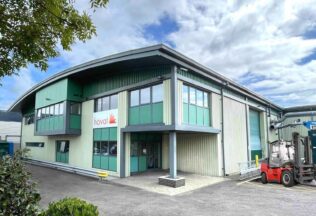
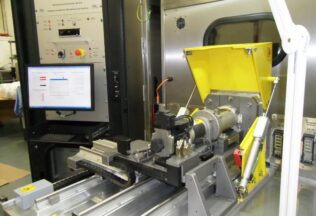
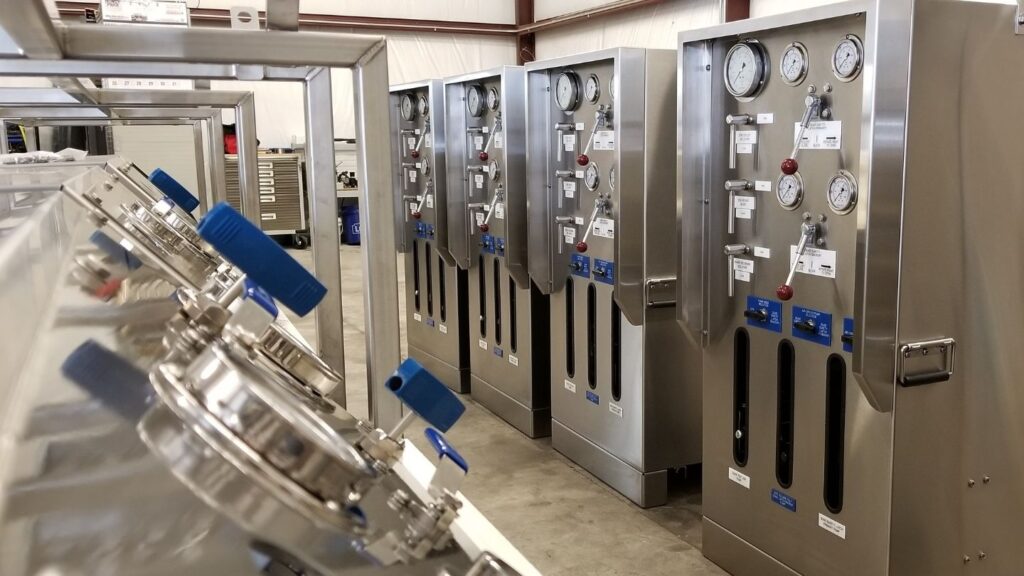
Nexus Automation and Control Systems is a manufacturer of custom industrial automation and control equipment from Lafayette, Louisiana. The company designs, engineers, and builds solutions such as conveyors, filling equipment, robotics, hydraulic and pneumatic systems, and control panels for a range of industries, including food & beverage, oil & gas, infrastructure, agriculture, and aviation.
The president of the company, Jason David, entered the oil and gas industry in 2005 after Hurricane Katrina had devastated much of the Gulf of Mexico infrastructure. David had just gotten out of the military and moved back to Louisiana when disaster struck. In the aftermath, he got into automation work, repairing offshore facilities and restoring remote control systems.
“That work ranged from installing new electrical or pneumatic/hydraulic control systems at remote locations to adding SCADA communications equipment for remote operations,” he says. “That’s where I fell in love with what we do.”
In 2016, after more than 10 years in the industry, David decided to forge his own path and started Nexus ACS, initially servicing customers locally in the Gulf of Mexico and throughout Texas. Today, their initial focus on oil and gas has expanded into other industries, and the company now builds products for businesses worldwide.
Growing product complexity led to stockouts and excess inventory
While the team initially used Excel and QuickBooks to manage the operations, by 2023, the company’s projects and portfolio had grown too complex for spreadsheets. A more integrated solution was needed; one that would enable the company to simplify inventory and BOM management and feed that data into procurement.
“In 2023, we had a capital project exceeding $1 million in value, and it had components seven levels deep in the bill of materials,” David says. “We tried to manage that in Excel with multiple sheets within sheets. It consumed a lot of man-hours and cost us money – overstocking in some cases, understocking in others, and then rush shipping and expedited costs for components we missed.”
According to David, the company needed something useful and flexible, with robust reporting and material requirements planning capabilities. After more than half a year evaluating platforms, including one that would cost $150,000 to implement, David decided to go with MRPeasy, an affordable solution designed specifically for manufacturing SMBs.
“What set MRPeasy apart was the ability to manage multi-level bills of materials with nested assemblies and manufacturing order processes,” he maintains. “It gave us a simpler way to view everything in a product or project, using the expanded bill of materials where we can see items and subassemblies in one view, export to PDF or Excel, and make sure everything is covered.”
Since founding the company, David has been keenly aware of the operations and the learning curve his team could handle. He wanted to understand the system well enough to serve as the internal implementation consultant for his team, answering questions without relying on outside contractors or incurring additional expense. He started implementing the system in July 2024, and by October, the team started running new projects and purchases through MRPeasy. Today, every product they make goes through the new system, from customer order to final delivery.
Better control over 3,000 SKUs and intricate custom products
A year and a half after going live, MRPeasy has brought across-the-board benefits to the company. Purchasing and inventory accuracy were the first to see substantial improvements. As most of their products are one-offs or made in low quantities, it is especially important to track materials and components. In addition to an array of project-specific items, the company carries a large inventory of standardized electrical, hydraulic, and pneumatic components, totaling around 3,000 stock-keeping units.
“We now have much better-quality information for purchasing – we know what materials need to be purchased and when, and we can track the statuses of our purchase orders in real-time,” David states. “This has drastically reduced the risk of stockouts and the costs associated with overstocking.”
The new system has also helped the company improve product quality and reduce administrative overhead by giving each department access to up-to-date information pertaining to their jobs. For example, when a bill of materials is modified by an authorized user, the changes are instantly reflected across the system, giving employees an accurate overview of purchasing requirements, assembly steps, production costs, and more.
“We can do more with fewer people and shift priorities because we can see exactly what we need to do this week to meet obligations months down the road,” David maintains. “In addition, we have better control over products, assemblies, drawings, and everything tied to them. When an assembly is already in the system, we can reuse its bill of materials and adjust it for similar projects instead of rebuilding everything from scratch.”
Becoming the product knowledge partner for clients
Nexus ACS’s customers have also seen direct benefits from the software implementation. One of the company’s clients has an especially intricate product, and when they place orders with Nexus, they may request changes that affect the assembly in unintended ways. Thanks to the multi-level BOM data in MRPeasy, however, the Nexus team can instantly see what else the client will need.
“When I look at the expanded bill of materials in MRPeasy, I can visually see the whole assembly on one screen,” David says. “That lets us tell the customer, ‘You need four of those on that item,’ even when their own teams don’t have that full view.”
According to David, an affordable but powerful solution like MRPeasy is invaluable to small manufacturers dealing with thousands of SKUs and complex builds.
“It enables us to operate efficiently,” he maintains. “Being able to visualize everything, tie documents and drawings directly to parts, and keep all information in one place is a great value. And not having to pay a lot to get it set up is also a big advantage.”
You may also like: How a Small Composites Manufacturer Achieved 98% Inventory Accuracy
Get manufacturing know-how delivered to your inbox!